List of The Most Popular Content Marketing Software With Features and Comparison. Select The Best Content Marketing Tool For Better Customer Retention:
Content Marketing is a tactical marketing approach to reach out and retain the audience. The content distributed is relevant thus it attracts consumers by providing authentic information.
Business enterprises want to focus on sharing high-quality content regularly. The customers make the decision solely led by information rather than the advertisement.
Eventually, the freedom of deciding without pressure brings sales conversions.

The variety of content used in marketing is cheaper than advertisements that fit your budget. By creating custom content, the companies can persuade the buying decision of customers. Valuing customers is valuing their choices and content provides that.
Content Marketing Software Statistics From (Forbes, Podcast, Aberdeen, CMI, HubSpot, Statista and Siegemedia)

[image source]
Suggested Read =>> Top 15 Best Content Calendar Tools
- Almost 70% of companies are using content marketing in some form.
- 60% of marketers create some content daily.
- 60% of B2C are devoted to content marketing.
- 58% of marketers believe that original content plays a major role.
- 86% of successful organizations have experts to manage their content strategy.
- 47% of B2B customers on average read four blogs before the inquiry.
- 87% of consumers want brands to share more videos.
- 87% of businesses use video as a marketing tool.
- 80% of the business owners and decision-makers prefer to receive the information through articles.
Our TOP Recommendations:
 |  |  |  |
 | |  | |
| monday.com | ClickUp | Wrike | HubSpot |
| • 360° customer view • Easy to set up and use • 24/7 support | • Organize projects at a glance • Collaborate with your team • Track progress and goals | • Free for up to 5 users • Pinnable to-do lists • Interactive reports | • Free CRM • Best email automation • Social Media Management |
| Price: $8 monthly Trial version: 14 days | Price: $5 monthly Trial version: Infinite | Price: $9.80 monthly Trial version: 14 days | Price: $45.00 monthly Trial version: Infinite |
| Visit Site >> | Visit Site >> | Visit Site >> | Visit Site >> |
What is Content Marketing?
Content Marketing is the process of reaching out to the masses, using various implements to promote content. Businesses to adopt customers’ stage-wise needs, address concerns, and are willing to meet expectations can explore content marketing.
Need for Content Marketing Software Tools
With the benefits listed below, you will be compelled to say that you wish to use content marketing platforms.
Benefits and Features of Content Planning Software:
- Creating Brand Awareness.
- Build and maintain relationships.
- Send the right content to the right target audience.
- Help people consider and choose.
- Notice the buying journey of customers.
- Empower people in decision-making.
- Organize Content and distribute it.
- Draw and measure ROI from content marketing.
- Send different styles of content (text, images, audio, and videos).
- It helps in lead generation.
- Track consumer activities.
- Share content using the software on social media platforms like FB, LinkedIn, and Twitter.
- Reduces costs of marketing and advertising.
- Generate more web traffic.
- Lessen the marketing costs.
What Does Content Marketing Include?
It includes a variety of methods to reach your target audience.
Some of the capable content marketing techniques include Audios, Videos, Infographics, GIFs, Graphs, Interactive Webinars, Text content like Blogs, E-books, PPts. PDFs. Each and every type of content marketing individually and in combination gives the desired results that each business awaits.
Purpose of Content Marketing
- Create content for each stage of sales.
- Expand the reach of your company.
- Lead generation
- Lead nurturing
- Increase conversion
- Sustain competition
Effectiveness of Content Marketing
- Lead conversion rates are 6x higher for those who adopt content marketing.
- 97% of marketers use social media to reach their audience and that is where they share the content.
- 72% of the content marketers found an increased number of leads and customer engagement.
- 9x more leads were generated from blogs with a long form of content (3000-10000 words).
- 93% of content marketers found interactive content to be effective.
- 75% of marketers are planning to increase the budget for using interactive content.
- 32% of the marketers feel visual images are more important.
- 60% of people enquire about the product after reading the content.
- Using videos on the landing pages increased conversion by around 86%.
- Revenues are expected to rise manifold with internet and content penetration.
Why Does Content Marketing Work?
- You address the problem and do not focus on just the product.
- Preach to spread the word rather than spending on advertisements.
- Convey to convince and help decide the best one for the customer.
- Creates trust for the brand and maintains trustworthy relations with the customers.
- Equal benefits are for existing and prospective customers.
- You address pain points and it strengthens a positive image as the customers draw value out of it.
- The sales team may have time constraints but the content is 24×7 available for service.
Content Marketing Strategy
Strategy for content marketing differs with the nature of the business, its goals, vision, and mission. Companies in the educational sector prefer e-mail campaigns. B2B content marketing tactics show the tremendous impact of various marketing campaigns.
Do I need to have a strategy for Content Marketing?
Over 87% of B2B companies prefer e-mail campaigns and only 54% of content marketers have a content strategy.
Without a strategy, you cannot get the benefit of content that you are creating nor you can withstand the competition. Content strategy needs to be original and must persistently focus on business and customer needs and define in what way you will concentrate on efforts.
Also Read => Best Press Release Samples
What Should You Consider While Preparing A Content Marketing Strategy?
- Type of content and your content readiness.
- Customers spread out and their expectations.
- Goals and content marketing activities.
- Selecting content distribution channels.
- Identify resources to allocate tasks.
- Stages of content marketing.
- Define the use of technology in every phase of content marketing.
- Parameters to measure the ROI on content.

[image source]
How To Choose The Best Content Management Tool?
The most required features that leave the impression of your business on the reader’s mind and the reliability of the content marketing tool are the main comparatives. Pricing and reviews can be a secondary point to consider and lastly, is the integration capability.
The type of content it lets you market should suit your needs. Hence, select the apt method from the audio, chart, video, pdf, gif, graph, ppt, etc.
See if it allows content versioning and import from any other platform. Check if it has a template library, easy means of creating content and storing it. At the advanced level of search, the content should be easily viewable. It should let you apply watermarks to the image and the charts.
The analytics gives enough prompt insights/alerts and thereby make you aware of the content utilization and provides good quality reports.
List of Top Content Marketing Platforms
Enlisted below are the most popular Content Marketing Software that is used worldwide.
- monday.com
- HubSpot
- Semrush
- SocialBee
- ClickUp
- Mediafly
- Visually
- StoryChief
- Percolate
- Curata
- ContentStudio
- SnapApp
- BuzzSumo
- Scalenut
- Outgrow
Comparing the Best Content Marketing Tools
| Software | Free Trial | Deployment/ Device Supported | Price | Recommended |
|---|---|---|---|---|
| monday.com | Available | Cloud-based, Windows, Mac, Android, & iOS. | It starts at $8 per seat per month for 5 users. | Small to large businesses. |
| HubSpot | Available | Cloud, Open API Windows, Android, Web, Mac, Windows Mobile, iPhone/iPad. | Free, $50, $800 & $3200/month. | B2B & B2C Small, Medium & Large Enterprises. |
| Semrush | Available | Cloud-hosted | Pro: $139.95/month Guru: $249.95/month Business: $499.95/month | Freelancers, startups, and small to large businesses. |
| SocialBee | Available | Cloud-Based, iOS, Android. | Bootstrap Plan: $19/month Accelerate Plan: $39/month Pro: $79/month | Freelancers, Small and Mid-sized businesses. |
| ClickUp | Free-forever plan offered | Widows, Mac, Linux, Desktop, iOS, and Android | Starts at $7/user/month. | Small to large businesses |
| Mediafly | Not Available | Hybrid Android, Windows8, Desktop, Mobile Browser. | Custom quote | B2B & B2C Small, Medium Enterprises. |
| Visually | Available | $195 to $15000/ month (five-tiered customizable pricing plan). | B2B & B2C Small, Medium & Large Enterprises. |
|
| StoryChief | Available | Cloud, SaaS, Web Installed-Mac Installed-Windows. | Free, $10/month & other plans. | B2B & B2C Medium and Large Enterprises. |
| Percolate | Available | Cloud Hosted Windows, Linux, Mac, Web-based. | $50 to 500/month. | B2B & B2C Medium & Large Enterprises. |
| Curata | Available | Cloud, SaaS, Web, | $20 to $500/ month. | B2B & B2C Small, Medium & Large Enterprises. |
| ContentStudio | Available | Cloud, SaaS, Web, Mobile-Android Native, Mobile – iOS Native. | $49, 99, 199 & 299/month. | B2B & B2C Small, Medium & Large Enterprises. |
| SnapApp | Available | Cloud, SaaS, Web, | $495, 1495, 2395 /month & customized. | B2B & B2C Small, Medium & Large Enterprises. |
| BuzzSumo | Available | Cloud, Windows, Linux, Mac, Web-based. | $39, 99, 179, 299, 499/ month. | B2B & B2C Small, Medium & Large Enterprises. |
| Outgrow | Available | Cloud, SaaS, Web. | $14, $25, $95 & $600/month. | B2C Small, Medium Enterprises. |
Detailed Reviews:
#1) monday.com
Best for marketing project management.

monday.com offers a tool for marketing project management. It has functionalities of content planning, Content calendar, blog planning, etc.
Suggested reading =>> Best free blogging platforms
Its editorial calendar provides the facility of organizing the content assets by channel, type, priority, and publish date. It will be easier to assign designers and editors and get to know who is doing what and when.
Pros:
- monday.com has a facility that will let you invite clients as guests so that they can see the progress and share feedback.
- Through creative requests, you will be able to easily share assets as well as receive feedback. monday.com allows you to customize such forms.
- Editorial Calendar is the facility that will let you plan the content.
- monday.com is the platform that can plan and manage small and large events.
- It can provide file storage from 5GB to 1000 GB.
Cons:
- monday.com has a little bit of a learning curve.
Verdict: monday.com offers one platform with multiple capabilities. It has communications essentials, collaboration essentials, Insights Essentials, and features for security and control.
#2) HubSpot
Best for small, medium, and large business enterprises.

HubSpot helps marketers in creating quality content, and it produces a variety of content to target a wide range of customers. It administers the complete content marketing system, analyzes the impact of the content and maintains the quality of the content.
Pros:
- Easy to set up and use.
- Effective and personalized content creation for the target audience.
- Content impact analysis.
- Affordable prices of software.
- Manage content and store it in a central location.
- Make the content as mobile searchable.
- Content Automation provides simplicity to marketing activities.
Cons:
- E-mail Marketing, Blogging, Video hosting, and management is in the paid version.
- YouTube integration is only in the Enterprise package.
- Feature and price equations have an imbalance.
- Works best when you can produce a large amount of content.
- New features/updates are introduced often.
- Difficult to export and move the content.
- Limited design templates.
- Tracking edited content is difficult.
Verdict: HubSpot content marketing software is best for provisions as it has for blogging, social media, sending emails, managing landing pages, automating marketing, guide on SEO, and accurate web analytics. The major benefit is that it allows Salesforce integration and monitors social media activities.
#3) Semrush
Best content platform for combining creativity and analytics in each step of your workflow.

Semrush provides an all-in-one marketing toolkit for digital marketing professionals. It offers various services for SEO, Paid Traffic, Social Media, Content & PR, and Market Research. It has solutions for E-commerce, Enterprise, and competitive research.
It has features to discover top players, indirect competitors, their traffic shares & trends with Market Explorer. It provides insights into your target audience and can research your target audience.
Pros:
- The platform will help you with the topic of research.
- You can create a content plan.
- It can provide SEO-Friendly content.
- It will let you track your team’s tasks and deadlines to ensure all activities will be implemented in time.
- It provides the functionalities to order content, optimize the article, measure the content impact, and revise & improve the content.
Cons:
- As per reviews, the UI needs improvement.
- Traffic volume is not accurate.
Verdict: Semrush Content Platform will boost your Content Marketing. It will help you to excel in your everyday marketing tasks. You can build, manage, and measure your campaigns across all online channels.
#4) SocialBee
Best for Content Planning and Scheduling for Social Media.

SocialBee is a cloud-based social media management tool that you can use to organize your content across multiple social media accounts. This platform comes with an in-built media editor that allows you to create, schedule, manage, and analyze social media posts. Plus, you get to do so from a single customizable content calendar.
The content calendar provides you with a bird’s eye view of all your posted content. From here, you can assign content to a specific category, pause automatic posting with a single click, and access analytics to assess your post’s performance over time. You also get to preview how each post will look on a particular feed in real time.
Pros:
- Easy to Use
- Supports all social media platforms.
- Allows you to preview posts before posting.
- Support Canva Integration
- Customizable Content Calendar
- Facilitates team collaboration
Cons:
- Hashtags suggestions need improvement.
- Dashboard looks a tad bit dated.
Verdict: SocialBee takes care of your social media content planning in an unprecedented efficient manner. With a customizable content calendar to boast and very strong integrations, this is a content planning tool you can use to manage your content across multiple social media profiles in complete auto-pilot mode.
#5) ClickUp
Best for AI-driven content creation.
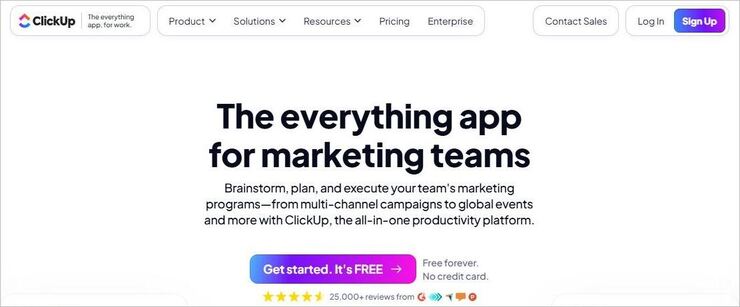
ClickUp is a solution that enables you to create content quickly, thanks to its generative AI capabilities. This AI will help you quickly generate campaign ideas, blogs, case studies, and content briefs from scratch. This can help your marketing team fast-track critical campaigns.
Once this content is generated, ClickUp can also help your team collaborate on it seamlessly with Whiteboards and Proofing tools. You can rely on this tool to ensure each member of your marketing and content team is on the same page.
Pros:
- Build marketing campaigns briskly with ClickUp’s AI.
- A visual dashboard that contextualizes tasks and the campaign roadmap.
- Seamless collaboration on content via Whiteboard and Proofing tools
- Excellent support round-the-clock.
- Flexible pricing with a free-forever plan.
- Facilitates more than 200 native app integrations.
- Mobile app for iOS and Android is also available.
Cons:
- Some users may find themselves dealing with a learning curve initially.
Verdict: ClickUp is an all-in-one solution that can immensely benefit marketing teams when it comes to brainstorming, planning, or executing a campaign. It earns a spot on our list for its AI capabilities, which can help you generate a variety of content critical to fast-tracking marketing campaigns.
#6) Mediafly
Mediafly is best for small and medium business enterprises.

[image source]
Its integration with Salesforce, SharePoint, and Dropbox empowers businesses to speed up work. It works perfectly even if you have a large sales team and covers all the aspects of digital marketing.
Pros:
- AI-powered content recommendations.
- Checks the ROI on content.
- Optimized search capability.
- Easily interacts with the customers.
- Secure and dynamic software.
- Manage digital assets efficiently.
- Select multiple items and edit in bulk.
- Target the right audience with the right content.
- Track how teams are using the content.
- Know where your mobile content is accessed.
Cons:
- First-timers can find it difficult to use.
- Expensive when the number of users increases.
- The console can be more engaging.
- Internet speed has to be fast else it causes interruptions.
- Accessing complex controls is simpler once you get the hang of it.
- Navigating through the dashboard is tough initially.
Verdict: If you are looking to increase the productivity of your sales team then this is one of the best content marketing software. Content effectiveness, access, and revenue-related information are useful for businesses to calculate the required changes.
Website: https://www.mediafly.com/
#7) Visually
This tool is best for small and medium business enterprises.

Visually allows us to utilize the software effectively for videos, infographics, ebooks, other social media content, and interactive content marketing.
Pros:
- Create personalized content without worrying about hiring people.
- Create content for target-specific.
- Content analytics and tracking.
- Faster and more affordable tool.
- Cloud-based collaboration.
- Great for creating visual content.
Cons:
- Takes time for the user to understand and use smoothly.
- Limited features.
- Dependency on the company for various services like content creation, etc.
Verdict: Visually is a good tool for multiple types of content being marketed. The reports and presentations are simple to access and easy to understand. Companies that trust Visually include Salesforce, Johnson’s, VISA, National Geographic, and much more.
Website: https://visual.ly/
#8) StoryChief
This tool is best for medium and large business enterprises.

Distributing content on multiple channels by scheduling a facilitated content calendar makes it a preferred option.
Pros:
- Distribute articles to different channels in a single software.
- Analytics dashboard shows how people interact with your content.
- Duplication of content can be avoided.
- Content created makes a precise impact on SEO.
- Single-click to publish on all platforms.
- It shows your keyword’s density.
- Integration with Google and Apple calendars to publish content.
Cons:
- It selects its own blog platform to publish the content, and we need to manually change to WordPress.
- Importing categories from WordPress is not allowed.
- Fewer features in the entry-level plan.
- Loading time while switching pages is slow at times.
- Drag and drag-and-drop facility is not available.
Verdict: StoryChief is a tool for content management that aids in creating, managing, and publishing content. It can track and measure content performance across all online platforms and is best for brand building.
Website: https://storychief.io/
#9) Percolate
This tool is best for medium and large business enterprises.

It allows you to manage content and market it on various platforms so that you can distribute it on social media and other channels as well. Great features help in planning, campaign management, and brand building.
Pros:
- Produce quality content in huge quantities.
- Supports building complex workflows and projects.
- Schedules content for weeks together.
- Asset management library to store and manage the content.
- Drag and drop navigation.
- Create new unique templates.
- Calendar planning tool gives a holistic view of the content.
- Integration with Office 365 and G Suite.
Cons:
- Cannot view all the comments in a single location, and an e-mail is received for each one.
- Not affordable to small companies.
- Post sent for approval cannot be changed/edited.
- Does not have Gantt chart capability.
- Issues in integration with LinkedIn.
- You cannot post on Instagram.
- Cannot update templates in real time.
Verdict: Companies like Google, General Electric, Cisco, and over 600 other brands use Percolate, and this certainly makes it more reliable and trustworthy for other users. Percolate is a complete web and mobile marketing software that increases the productivity of the marketing team.
Website https://percolate.com/
#10) Curata
This tool is best for small, medium, or large business enterprises.

Curata is a content marketing software that helps companies to grow leads with revenues using the content created and distributed on social platforms. This software makes it possible for marketers to find, organize, publish, & promote content in just a few minutes.
Pros:
- Build Connections.
- Refine the relevant content for distribution.
- Review the content faster.
- Improved audience engagement.
- Customize the insights required by your company.
- CMS Integrations with WordPress, Joomla, etc.
- Filters outdated content.
- User and access management.
Cons:
- A bit expensive for smaller organizations than the other alternatives.
Verdict: From 2007 until today, hundreds of companies including CISCO, IBM, Bayer, Thermofisher, and Lenovo trust this Curata content marketing software. It is best for campaign management, conversion tracking, SEO management, schedule publishing, and building connections.
Website: http://www.curata.com/
#11) ContentStudio
This tool is best for small, medium, and large business enterprises.

ContentStudio is a content planning software that enables you to discover and compose content. It allows you to share the content easily on various platforms and yet maintain a consistent style.
Pros:
- Bulk Upload and content version control.
- Article and Video Automation.
- AI-Powered Captions.
- Integrations with FB, Twitter, LinkedIn, etc.
- Amazing updates with clear communication.
- Campaign Automation.
Cons:
- Keyword search is not available.
- Domain-specific publish is not confirmed at times, though it is published.
- Exploring the features and UI is time-consuming.
- YouTube videos cannot be shared on other platforms except for their links.
- Topic search is not accurate and you need to try different combinations to find the content.
- Image editor does not function as per the expectation.
Verdict: Reliable and has 30000 plus customer base. It is a perfect tool for uncovering trending content, managing multiple online networks, recycling popular posts, analyzing performance, and collaborating with the team.
ContentStudio offers the discovery of topic-relevant filter content by social shares, different media types, and viral status.
Website: https://contentstudio.io/
#12) SnapApp
This tool is best for small, medium, and large business enterprises.

SnapApp is an interactive content creation platform, which enables marketers to create, deploy, manage, and measure content performance across platforms. It creates awesome content for the website and other marketing campaigns. Content customization and design control make it a powerful content creation tool.
Pros:
- Access it on a mobile device.
- Best quiz features.
- Import leads to HubSpot.
- Simple to use and create interactive PDFs, ebooks, infographics, etc.
- Handling campaigns is easier.
- Customize anything you need.
- Easy to navigate.
- Integration with the existing systems and tools like HubSpot, Salesforce, Marketo, etc.
Cons:
- Users themselves customize a few of the features mentioned on the site.
- Editing text needs improvement.
- Creating content like infographics, interactive webpages, and video players take more time.
- Associating responses to the respondent is not possible.
- Need to create the second version for mobile users.
Verdict: SnapApp tool is best for activities like quizzes, assessments, calculators, interactive videos, and much more. Companies that use SnapApp include Oracle, Salesforce, Hewlett-Packard, etc. Strong enough to custom the development process, and plan the cycles, and it also allows control over building the brand.
Website: http://www.snapapp.com/
#13) BuzzSumo
This tool is best for small, medium, and large business enterprises.

BuzzSumo is a powerful tool that offers content creation, distribution, and social media analytics features. The advanced data filters, content curation tools, and social media content insights can be of great help in creating high-yield marketing strategies.
Pros:
- Open API helps to extend the functions of the platform.
- Hassle-free alerts on competing brands for the content shared across platforms.
- Tools to create custom posts using the same content.
- Insights on SEO keywords.
- Easily select the social media platform suitable for your business.
- Content analyzer helps to find popular topics.
- Real-time alerts are useful for new campaigns.
- Brand mention alerts.
- Instant search of content for a period of the last 12 months.
Cons:
- The user interface needs improvement.
- Companies with a common name can face issues while searching for similar names that are displayed in the results for the brand mentioned.
- The scheduling feature requires improvement.
- Searched content does not show its URL.
Verdict: BuzzSumo is an exceptional content tool that allows you to see all viral content and the most shared content across social sites. Track the trend of content over a period and watch what competitors are sharing. Find the content that supports your business goals to sustain in the market.
Website: https://buzzsumo.com/
#14) Scalenut
Best for AI-powered content planning.

Scalenut is an all-in-one content management tool that’s powered by an advanced AI. You can count on its AI to get acquainted with some powerful recommendations when it comes to keyword clusters, blog topics, content strategies, etc. With just a single click, Scalenut can generate a compelling content plan at your behest.
Scalenut also delivers in the research department. It can unearth valuable insight that could help your content strategy immensely. It will arm you with the stats and semantics necessary to outpace competition. Finally, it helps in the creation of content that is ready-to-rank, SEO optimized, factually correct, and plagiarism-free.
Pros:
- Flexible pricing
- AI-Powered content planning
- AI-powered content research
- Easy to use
- Auto-optimizes content
Cons:
- The cheap plan may feel inadequate for some.
Verdict: Powered by an advanced AI, remarkable research capabilities, and an easy-to-use interface, Scalenut is one of the finest content marketing platforms out there today.
#15) Outgrow
This tool is best for small and medium business enterprises.

Outgrow has wonderful content marketing features for audience targeting, brand management, campaign management, conversion tracking, distribution management, SEO, and video management.
Pros:
- Flexible and intuitive app.
- Easy to use even for beginners.
- Best for inbound marketing.
- Builds unique interactive lead magnets.
- Provides interactive content.
- Credibility of data as it is filled by the visitors.
- Exports aggregated data.
- Merge data easily.
- Perform advanced analysis.
Cons:
- Can send only contact details, and not any other information.
- Basic interface for analytics.
- Writing calculations can be overwhelming in the case of complex forms.
- Exploring all features can be time-consuming.
- Minor-level script issues are found.
- Costly plans and low tiers don’t allow you to use all the available features.
Verdict: It is a great lead-generation tool. Feature libraries, templates, and other documentation help the users to a great extent. Accelerates lead qualifying process and helps customer engagement. Qualifying leads at a low cost helps the companies in conversions. Directly pushes the leads to Salesforce and thereby saves time.
Captures the leads and directly adds to the CRM. Uses these leads to send e-mails via MailChimp. It is recommended for B2C for the number of leads that are required to close sales.
Website: https://outgrow.co/
Conclusion
The magic of content is drawing the customers to the pool of knowledge, thereby allowing them to choose you over your competitors.
Content Marketing Software helps to market the content, build the brand, and maintain customer relations. It is the best way to reach the decision-makers, and ultimately multiply sales.
Content marketing can be beneficial if you are into Advertising, Education, Training, Insurance, Financial Services, Retail, PR & Communications, Manufacturing, Media, Technology, Healthcare or any other industry. If you have some text, images, or graphs to share then the content marketing system can keep track of all the activities.
Recommended reading =>> Social Media Content Calendar Tools
B2B and B2C marketing have reached new heights with the ease created by the latest software. Selecting a content marketing tool should include your long-term goals and profits. Acquiring new clientele and effective operations should have a robust partnership.
Hope this article will help you in choosing the best Content Management Software for your business!!
Was this helpful?
Recommended Reading
-

Comparison of the Best Free Android and iOS Mobile App Development Software Tools and Platforms to create stunning high-quality Mobile Apps for Your Business: App development software is an application that helps with the app development process by providing functionalities like IDE, code-free development, templates, API, data synchronization, and Analytics.…
-
Complete comprehensive understanding of Content Marketing Strategy, including its types, templates, frameworks, examples, etc: Do you know, according to HubSpot, 82% of marketers are vigorously investing in content marketing? Yes, that’s true! However, it is crucial to opt for a well-researched content marketing strategy to get the desired results. So, if…
-
This guide provides a complete understanding of Inbound Marketing including strategies, examples, etc. Learn the differences between inbound vs Outbound Marketing: In this article, we have covered the definition of inbound marketing, some facts related to it, examples, strategies, the difference between inbound and outbound marketing, HubSpot inbound marketing, need,…
-

The List of the Best On-premises and Cloud-Based Call Center Software for Inbound and Outbound Calls with Pricing and Feature Comparison: What is Call Center Software? Call Center Software is an application that has the functionality for managing customer communications coming from multiple channels and sources. It helps agents make…