


Learn all about the different Types Of Cryptocurrency and Tokens with features and examples:
While Bitcoin was the first operational public cryptocurrency, it is not the only type, and there certainly are many variations of cryptocurrencies. We can identify at least four types of cryptocurrency depending on how they are formulated or code design, application or use case, and other factors.
You might get coins, payment tokens or altcoins, security tokens, non-fungible tokens or NFTs, decentralized finance tokens, utility tokens, and other categories.
This tutorial teaches about the different types of cryptocurrency and tokens. We also include information like how cryptocurrencies are differentiated, ways they are utilized, and rich examples of the different types.
Table of Contents:
- How Cryptocurrencies Are Differentiated
- Frequently Asked Questions
- Comparison Table of Different Types of Cryptocurrency
- Different Types of Cryptocurrency: Explained
- #1) Utility Tokens
- #2) Security Tokens
- #3) Payment Tokens
- #4) Exchange Tokens
- #5) Non-fungible Tokens
- #6) DeFi Tokens Or Decentralized Finance Tokens
- #7) Stablecoins – Fiat And Other Types
- #8) Asset-backed Tokens
- #9) Privacy tokens
- Conclusion
How Cryptocurrencies Are Differentiated

Although the term cryptocurrencies are used to define all the different types of cryptocurrency or digital currencies, it is commonly interchanged with coins. They are commonly regarded so despite many of them not serving as a unit of account, store of value, and a medium of exchange, although Bitcoin does.
However, coins can be differentiated from altcoins. The term altcoins is also a common reference to cryptocurrencies of all types apart from Bitcoin, in that they are seen as an alternative to Bitcoin.
Coins: Coins can be differentiated from altcoins because they are based on their blockchain. On such a blockchain, they act as the native token as well as gas or fuel payment token, although a blockchain can have the gas paid in a different cryptocurrency. A good example is Bitcoin on the Bitcoin and Ether or ETH on the Ethereum blockchain.
In terms of constructing or developing a cryptocurrency, it starts or comes along with developing a blockchain.
Altcoins: Although these can be regarded as coins, they are all understood to be alternatives to Bitcoin as the first cryptocurrency. Also known as shitcoins, apart from Ethereum, most of the first ones were forked from Bitcoin. These include Namecoin, Peercoin, Litecoin, Dogecoin, and Auroracoin.
Suggested Read => Best Altcoins to Invest
That said, some altcoins like Ethereum, Ripple, Omni, and NEO have their blockchains. Others do not.
Tokens: Tokens are the digital representations of a particular asset or utility in a blockchain. All tokens can be termed altcoins, but they are differentiated by residing on top of another blockchain and not being native to the blockchain on which they reside.
They are coded to facilitate smart contracts on blockchain networks like Ethereum, and we can transfer some from one chain to another. The tokens are embedded in self-executing computer programs or codes and can operate without a third-party platform. They are also fungible and tradable. They can be used to represent loyalty points and commodities or even other cryptos.
When designing or coding a token, the developer will require following a given template. The developer does not need to edit or code the blockchain from scratch. All they have to do is follow a given standard template. It is faster to come up with a token.
It used to be Initial Coin Offering or ICOs and initial exchange offering as a method of distributing and initially raising capital for the projects issuing tokens. However, they can be issued without IEO or ICOs.
Further Reading => Most Popular Crypto Exchanges for Altcoins
Frequently Asked Questions
Q #1) What are the four types of cryptocurrency?
Answer: The four major types include utility, payment, security, and stablecoins. There also are DeFi tokens, NFTs, and asset-backed tokens. Of all cryptocurrencies, the most common are utility and payment tokens. These do not have their investment-backed or guaranteed by regulation.
Q #2) What are the five biggest cryptocurrencies?
Answer: The five biggest cryptocurrencies are Bitcoin, Ethereum, Tether, Cardano, Binance Coin. We also have Solana. Bitcoin has the largest market share of over 40 percent as of November 2021, according to CoinMarketCap data. That makes a total market cap of $1.16 trillion. Ethereum has a market cap of over $514 billion.
Q #3) How many types of cryptocurrency are there?
Answer: There are about nine types of cryptocurrencies. They include utility, exchange, payment, security, stablecoins, DeFi tokens, NFTs, and asset-backed tokens. These categories are based on several things, including the formulation or code, application or use case, and functioning of the cryptocurrency.
Q #4) Which crypto will explode this year?
Answer: There are just a handful of cryptocurrencies that did not explode this year, especially because of the massive gains experienced with the largest crypto Bitcoin.
Of all types of cryptocurrency, Bitcoin exploded the most, but in terms of ROI, it is yet to beat the likes of Shiba Inu, Ethereum, Dogecoin, and Shushi. Non Fungible Tokens and DeFi tokens are also showing a lot of promise this year.
The best in terms of return on investment include First Bitcoin, Verasity, Fantom, Polygon, Solana, Dogecoin, Telcoin, XYO Network, Harmony, Lukso, Decentraland, Sand, Chiliz, and Dent.
Q #5) Which crypto is best to invest in?
Answer: If you are considering the best crypto to invest in terms of types, look at security tokens, asset-backed tokens, NFTs, and DeFi tokens. It is essential to carry out one’s research to determine the fundamentals of the token as well as the growth potential, and to seek investment advice if needed.
Comparison Table of Different Types of Cryptocurrency
| Type | Main feature | Examples |
|---|---|---|
| Utility tokens | ·Meant to provide access to platform service where they reside. | Funfair, Basic Attention Token, Brickblock,Timicoin, Sirin Labs Token, and Golem. |
| Security tokens | Usage and issuance governed by financial regulation. | Sia Funds, Bcap (Blockchain Capital), and Science Blockchain. |
| Payment tokens | Used for paying for goods and services inside and outside their own platforms. Almost every crypto falls in this category. | Monero, Ethereum, and Bitcoin. |
| Exchange tokens | Exchange tokens are native to crypto exchange platforms. | Binance Coin or BNB token, Gemini USD, FTX Coin for FTX Exchange, OKB for Okex exchange, KuCoin Token, Uni token, HT for Huobi exchange, Shushi, and CRO for Crypto.com. |
| Non-fungible tokens | Non-fungible tokens are cryptocurrencies with limited issuance that have unique identities and tokens that make them hard to copy or replicate. | Good examples include Logan Paul’s video clips, Twitter Founder Jack Dorsey’s first tweets NFT, EVERYDAYS: The First 5000 Days drawings by Mike Winklemann, better known as “Beeple”, and several crypto kitties. |
Different Types of Cryptocurrency: Explained
#1) Utility Tokens
[image source]
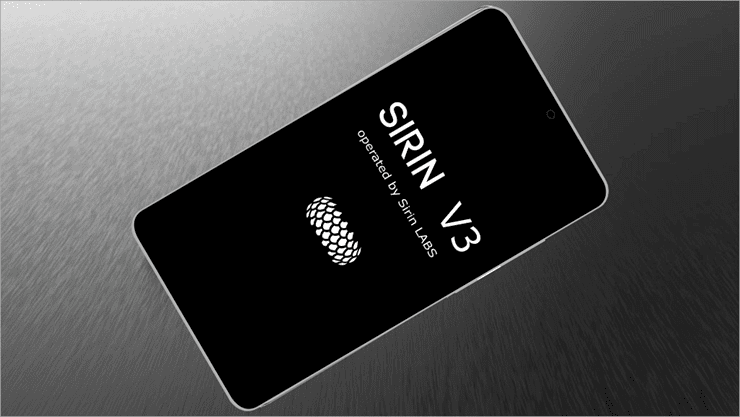
Utility tokens are thought of as coupons or vouchers but essentially are digital units representing a value on the blockchain. In other words, the token provides certain access to a product or service run or operated by the token issuer. A person can gain access by buying the token and can redeem it for a defined access value to the product or service.
- The holder gains the right to product or service to an equivalent value of token but not ownership. For instance, they can access the product or service at discounted fees or for free as long as they hold the tokens.
- In some jurisdictions, defining a cryptocurrency as a utility token means it is not under any financial regulation.
- The main understanding is that they are not investment products and can lose value completely at the expense of the holder.
- Utility tokens are better understood from a regulatory perspective in that they are not assumed to be regulated. The holder of the token is not holding an equivalent of stock or bond or other asset regulated under financial acts.
- Applications include access to decentralized storage in a decentralized storage network, rewards tokens, and as currency for a blockchain.
Examples of utility tokens: Funfair, Basic Attention Token, Brickblock, Timicoin, Sirin Labs Token, and Golem.
#2) Security Tokens

[image source]
These are securitized cryptocurrencies that derive value from an external asset that can be traded under a financial regulation as security. They, therefore, are used for securitized tokenization of properties, bonds, stocks, real-estates, property, and other real-world currencies.
- Therefore, because of the nature of transactions, their exchange, issuance, dealings, value, tokenization, backing, and trading must be controlled and governed by financial regulators to protect user investments.
- The regulation, in such a case, exists to guarantee user funds and investments and to hold founders responsible.
Security tokens represent a stake, share in stock or equity, voting rights, and right to the dividend in the asset represented. Owners or holders receive part of the profit from the issuers’ or managerial actions and decisions.
- They are issued through Security Token Offering (STOs)
- Their applications include where investors need instant settlement, transparency in management, divisibility of assets, etc.
Security tokens are further divided into:
- Equity tokens: These are similar to traditional stocks in form and operation except that ownership and transference happen digitally. Investors are entitled to dividends from managerial and issuer actions and decisions. Debt tokens represent short-term loans that carry pre-defined interest rates.
- Asset-backed tokens: These are backed by real-world real estate, art, carbon credits, or commodities as underlying value. They carry characteristics of gold, silver, oil, etc. They are tradable, etc.
Examples of security tokens: Sia Funds, Bcap (Blockchain Capital), and Science Blockchain.
#3) Payment Tokens
[image source]
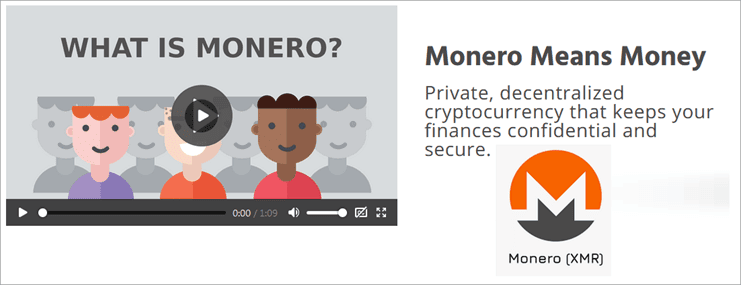
As the name suggests, payment tokens are those used for buying and selling goods and services on digital platforms without an intermediary, as happens in traditional finance and banking arenas. Of course, the majority of cryptocurrencies and tokens fall into this category, whether they are security or utility. However, not all utility tokens can be payment tokens.
- Mostly hybrids of other tokens.
- Payment tokens do not represent and cannot be invested in as securities. Hence, they do not fall under financial regulation as asset securities.
- They may or may not guarantee holders’ access to any product or service now or in the future.
Examples of payment tokens: Monero, Ethereum, and Bitcoin.
#4) Exchange Tokens
[image source]
There may be debate about what exchange tokens are but are given the name for their issuance by and use in the cryptocurrency exchanges, which are crypto marketplaces for buying and selling and swapping tokens.
Although they can be used outside their native exchange environments, we primarily used them for facilitating exchange between other tokens or as gas utility payments on these exchanges.
- Centralized exchanges with or without decentralized platforms or own blockchains can issue them.
- They can be used for cheaper gas or fees payment, increasing liquidity, providing free discounts, governing blockchains for instance, for voting rights, or providing access to particular crypto exchange services.
- For increasing liquidity, exchanges use them to lure people into participating in the projects.
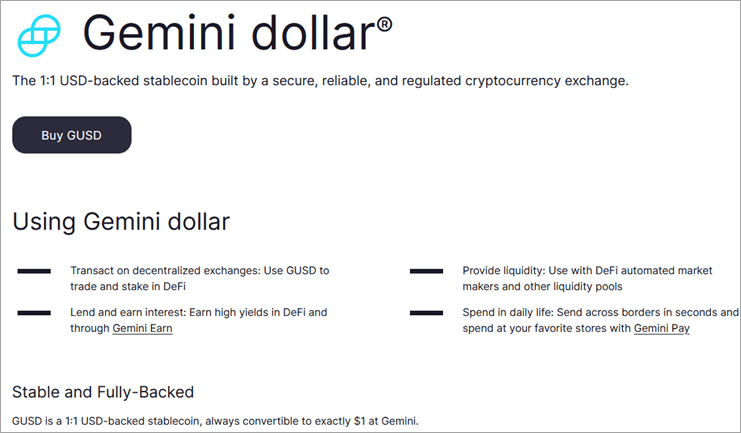
Examples of exchange tokens: Binance Coin or BNB token, Gemini USD, FTX Coin for FTX Exchange, OKB for Okex exchange, KuCoin Token, Uni token, HT for Huobi exchange, Shushi, and CRO for Crypto.com.
#5) Non-fungible Tokens
[image source]
A non-fungible token is a digital certificate of ownership to a unique, non-replaceable item or one not tradeable with another, and one-of-kind asset on the blockchain.
It is developed using the same technology used in developing other types of tokens but mainly used to represent a work of art, photos, videos, audios, collectibles, real estate, virtual worlds, memes, GIFs, digital content like posts and tweets, fashion, music, paintings, drawing, pornography, academia, political items, film, memes, sports, games, or digital files of value but on the blockchain.
- The first NFT was created in 2015 on the Ethereum blockchain.
- The digital signature is created such that it cannot be exchanged for another.
- They allow the holder to own an original item of a limited supply, originality, or edition.
- Because of high value, the issues may be limited edition or not possible to reproduce or copy. Best NFTs are those where only one person or a few can own an original.
- It helps artists, creators, and collectors, mainly, to sell their items.
- They can be bought and sold in NFT marketplaces like OpenSea, Rarible, Foundation, and Decentraland.
- The application includes popularity, monetizing wares, for royalty payment such that artists will receive a percentage of sales whenever the art is sold to a new user, partial ownership of land and expensive assets, auctioneering to raise capital and money such as Charmin and Taco Bell auctioneering of themed NFTs, creating unique moment memory or preserving histories, for market motives like trading, and celebrity issuing.
- We can differentiate them from Initial Exchange Offering tokens, which are normal Initial Coin Offering tokens offered through a crypto exchange promotion.
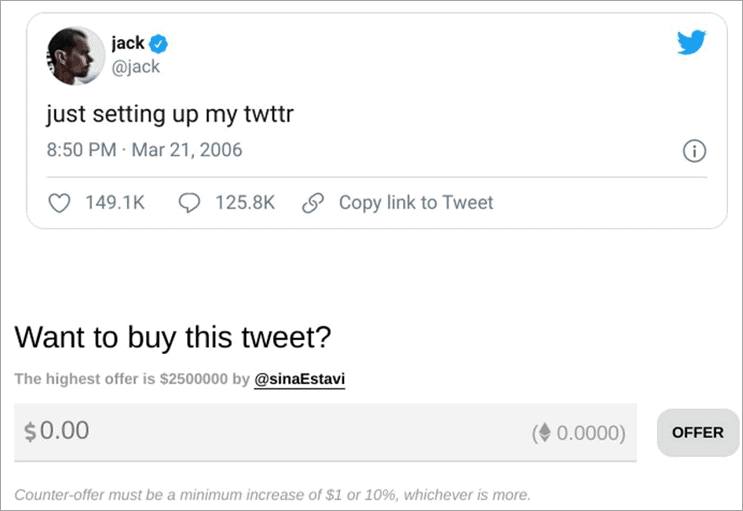
Examples of NFTs: Logan Paul’s video clips, Twitter Founder Jack Dorsey’s first tweets NFT, EVERYDAYS: The First 5000 Days drawings by Mike Winklemann, better known as “Beeple”, and several crypto kitties.
Also Read => List of Best NFT Stocks to Buy in 2022
#6) DeFi Tokens Or Decentralized Finance Tokens
[image source]
Decentralized finance refers to financial applications or dApps built on the blockchain or distributed ledger, which makes them distributed and those that render financial and money control directly to the user while allowing them to transact on a global scale with peers to peer methods and access to global markets.
These DeFi apps are accessible to anyone with internet connectivity. Each DeFi app is powered by a token economy behind which there is a native token. These tokens are a form of programmable money where developers can program logic into payments and transaction flows.
- Most of DeFi tokens are currently based on the Ethereum blockchain. Other blockchains with support for DeFi include Stellar, Polygon, IOTA, Tron, and Cardano.
- Through these tokens, people can earn, lend, borrow, long/short, earn interest, save, grow and manage the portfolio, buy insurance, invest in securities, invest in stocks, invest in funds, send and receive monetary value, trade value on decentralized exchanges, invest and buy assets, sell assets, and more.
- Examples of well-known decentralized finance tokens include Solana, Chainlink, Uniswap, Polkadot, Aave, and many others. Some categories of DeFi applications include decentralized lending apps, decentralized exchanges, decentralized storage sharing, etc.
- The most powerful feature about DeFi tokens is smart contracts, allowing anyone to define, write, program, and execute transactions rules based on certain conditions and have transactions executed when those conditions are met.
#7) Stablecoins – Fiat And Other Types

[image source]
As the name suggests, these are tokens of a stable value in nature in that their value is somewhat predictable in the sense that it remains the same almost all the time. Stable tokens or stablecoins as they are mainly called, are backed by a stable or fairly value-stable asset like fiat. So we have dollar and Euro-stabilized or backed stable coins, gold and other precious metals, oil, and commodity-backed tokens.
- Stable tokens help the world to rid of volatility in assets or even other digital currencies.
- They are backed on a defined ratio and the asset backing them must be kept in reserves as per the defined ratio. We have those backed by fiat, crypto, commodity, and algorithmic stablecoins which use software and rules to maintain the stable peg with fiat or another asset.
Examples of stablecoins: Tether, which is backed on a 1:1 ratio with USD fiat, the same as TruSD, Gemi Dollar, and USD Coin, and Paxos. Kitco Gold, Tether Gold (XAUT), DigixGlobal (DGX), and Gold Coin (GLC) also serve as stablecoins backed by gold. Algorithmic-backed stable coins include Ampleforth (AMPL), DefiDollar (USDC), Empty Set Dollar (ESD), Frax (FRAX).
#8) Asset-backed Tokens
[image source]
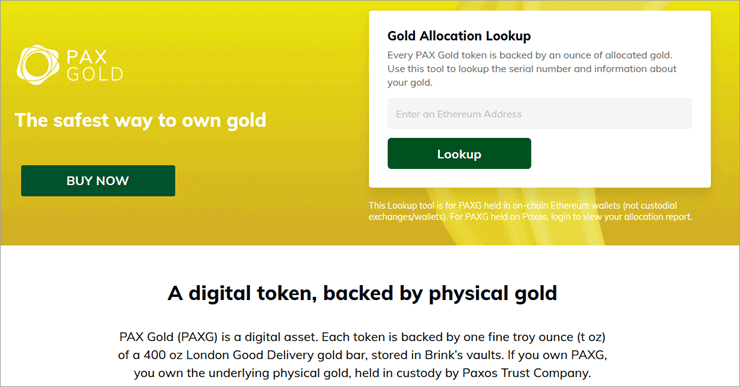
Asset-backed tokens are a category of cryptocurrencies whose underlying value is backed by a real-world asset that could be other money, stock, bonds, real estate, gold, and precious money. They are used to digitally represent and trade value for these underlying assets but on blockchains.
Most of these are offered as security tokens due to the nature of transactions involving the underlying assets. They are mostly issued through the Equity Tokens Offer (ETO).
- They could be backed at any ratio depending on the issuer.
- Precious metal-backed tokens include PAXG and DGX which are backed by gold. Read more on other gold-backed tokens from our other tutorial.
- Company share-backed tokens allow tokenizing of company shares and trading them on crypto exchanges. Examples include Quadrant Token which tokenizes the Quadrant Biosciences Inc equity, Neufund, The Elephant Private Equity Coin, Slice, Document, BFToken, The Dao, and RRT Token
- Tokenized commodity tokens are also known as crypto commodities represent the value of commodities and allow tokenization and trading of oil, natural gas, renewable energy, wheat, sugar, etc.
Examples of asset-backed tokens: OilCoin which tokenizes barrels of oil held in reserve, Petroleum Coin, Ziyen Inc Oil token, etc. The Energy Web Token (EWT) tokenized energy, Green Energy Token by WPP, etc. Wheat Token Coin for wheat tokenization, etc.
#9) Privacy tokens
As the name suggests, these are cryptocurrencies used for privacy applications because their code encourages better privacy than would Bitcoin and mainstream crypto.
There are many reasons one would need better privacy in crypto transactions – first as a right to privacy, security investigations, and highly sensitive transactions, although they are also used for crime and scams.
- These cryptocurrencies incorporate different methods of ensuring transaction privacy, e.g. coin mixing, anonymity techniques like CoinJoin, and offline transactions. This is in addition to techniques employed in mainstream crypto e.g. lack of tying real-world names with crypto addresses and blockchain encryption.
Examples of privacy tokens: Monero, Zcash, Dash, Horizen, Beam, and Verge.
Conclusion
Here, we discussed all the different types of cryptocurrency. For those asking how many types of cryptocurrency are there, we have listed 9 common types. Of all types of cryptocurrencies, the main ones are payment tokens.
Based on these categories, security tokens are the best to invest in, although basically all payment tokens are ideally fit for that purpose. Only that utility tokens are not backed by regulation and so no one to hold accountable if an investment goes bad.
If it is a scam, it would be known long before it goes far. Most utility token projects survive in the market based on keeping their word to their investors because that affects demand and usability or utility directly.
Was this helpful?
Recommended Reading
-

Compare and select the best Gold Backed Cryptocurrency based on this in-depth review of cryptocurrencies backed by Gold: All gold-backed cryptocurrencies are derivative assets that let you access purchases, trading, and holding of physical gold at will at any time and location. They remove the transport inconveniences, illiquidity, transferability, and…
-
Here is the review and comparison of popular Crypto Debit and Credit Cards with features to help you decide which card is the best for you: Cryptocurrency debit and credit cards are currently countable because of the many banking restrictions on crypto transactions. Many cards are suitable for regular shoppers…
-
Do you trade in Cryptocurrencies and need to pay taxes? Review and compare the best Crypto Tax Software to select the most suitable tax software: The number of people investing in cryptocurrencies is overwhelmingly increasing day by day. This is because it can make you a millionaire or even a…
-
Review, compare and select from the list of top Exchanges to Buy Crypto and Bitcoin in Germany based on this review: Germany is one of those countries that recognize licensed cryptocurrency exchanges and wallet providers as part of the financial services industry, although there is no specific crypto use regulation.…
-
List and comparison of the top Cryptocurrency Trading Apps with features and fees to select the best cryptocurrency app for secure trading: Most people consider trading cryptocurrency as a way of earning passive income. Others consider it as an alternative investment to other traditional forms of investments. Speculative crypto traders…
-
Here we will review and compare the top Cryptocurrencies to Invest in to help you select the best Cryptocurrency that offers the highest rate of return and high liquidity: Cryptocurrencies allow people to send and receive money to and from anyone around the world regardless of their location at a…
-
Review and compare the best cryptocurrencies to help you understand how to mine cryptocurrency, and select the best cryptocurrency to mine: Cryptocurrency mining offers an opportunity for individuals to earn passive income on a daily basis. It is a process through which distributed nodes on a given crypto blockchain confirm…
-
Here we compare features of the top apps for crypto exchanges to help you get the best cryptocurrency exchange service as per your need: Cryptocurrency trading can be done in two ways i.e. either to exchange one digital currency for another you want to use or keep, or to make…


