Put an end to your search for the best Duolingo Alternative with our curated list of the top language learning apps. Compare & analyze the top apps that would help to fulfil your fluency goals:
With over 130 million monthly active users, Duolingo is undoubtedly one of the most popular language learning apps on the planet today. It’s become somewhat of a household name and an app sought by almost everyone who wants to master a foreign language.
If you ask me, however, I don’t think Duolingo is all that great for learning languages. Sure, its gamified approach can help you expand your vocabulary in over 42 languages. You can also use it to learn scripts and practice your writing and pronunciation skills.
Table of Contents:
- Top Replacements for Duolingo: Language Learning Apps Compared
- Why People Search for Duolingo Alternatives
- What to Consider While Choosing a Duolingo Alternative
- List of the Best Duolingo Alternatives
- Comparing the Top Duolingo Competitors
- Free Vs. Paid Language Learning Apps
- Frequently Asked Questions
- Conclusion
Top Replacements for Duolingo: Language Learning Apps Compared
That said, the app isn’t really that effective at teaching you grammar, which forms the foundation of any language. There are many better alternatives to Duolingo out there that don’t get the attention or praise they deserve.
[Via Duolingo]
In this article, I would like to give such apps their deserved share of limelight.
So, without much further ado, let’s dive in.
Why People Search for Duolingo Alternatives
Duolingo is a popular and one of the most sought-after language learning apps out there. That’s largely because of its fun and engaging nature, thanks to its gamification-driven courses. This gamification aspect makes the app immensely addictive. That said, fun doesn’t mean effective.
People often complain about how they’ve spent months on Duolingo trying to master a language only to fail when it comes to putting those lessons into practice. Sure, Duolingo offers engaging sessions that can be effective if you wish to expand your vocabulary or learn scripts.
However, the platform lacks explicit grammar instructions, which are necessary for engaging in real-world conversations. Take a look at our in-depth guide on Top Grammar Checker Platforms here.
Duolingo also relies heavily on AI, which is another area of disappointment for many other users. For instance, you’ll need to listen to the robotic voice of an AI to pass listening tests. I wish to improve and have employed audio recorded by native speakers.
Check out the video below titled “Why Everyone is Canceling Their Duolingo Subscription Right Now.”
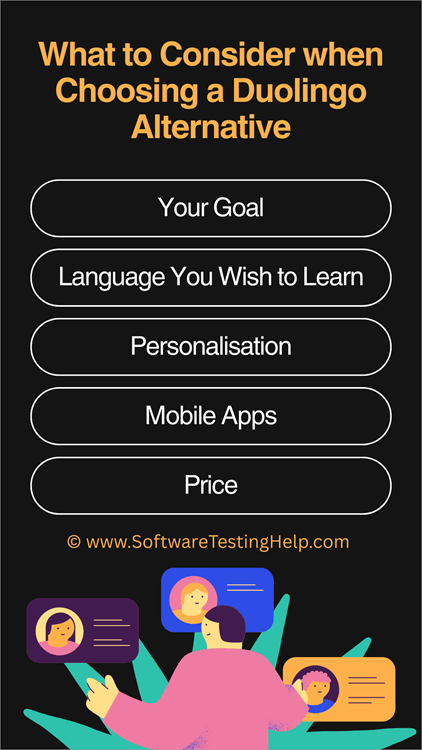
What to Consider While Choosing a Duolingo Alternative
1. Your Goal
This is the very first thing you’ll need to consider when opting for a Duolingo alternative. Why do you need a language learning app? Is it to master your grammar? Do you want to improve your speaking skills? Or maybe you want to get better at listening. Choose an app that can help you achieve your goals.
2. The Language You Wish to Learn
With your goal clarified, you’ll need to look into whether the app you seek offers courses in the languages you wish to learn. If you want to learn Japanese, ensure your app offers courses in it.
3. Personalization
An app that offers courses and sessions tailored to your skill level will automatically serve as a better alternative to Duolingo. A platform that offers courses personalized by native speakers is a huge bonus.
4. Mobile Apps
Make sure the alternative you choose offers an intuitive, highly optimized, and user-friendly mobile app that’s compatible with your phone. This way, you can keep up with your lessons on the move.
5. Price
You are going to find both paid and free language learning apps out there. I would suggest opting for the premium plans to avoid ads and use the platform to its maximum potential. Also, make sure the price cited fits well within your budget. Try the free version of the platform to test it before you decide whether to pay for the full version.
List of the Best Duolingo Alternatives
Here is a popular list of Language learning apps to consider:
- Busuu
- Drops
- Babbel
- LingoDeer
- Memrise
- Mondly
- Ling
- Rosetta Stone
Top Duolingo Alternatives
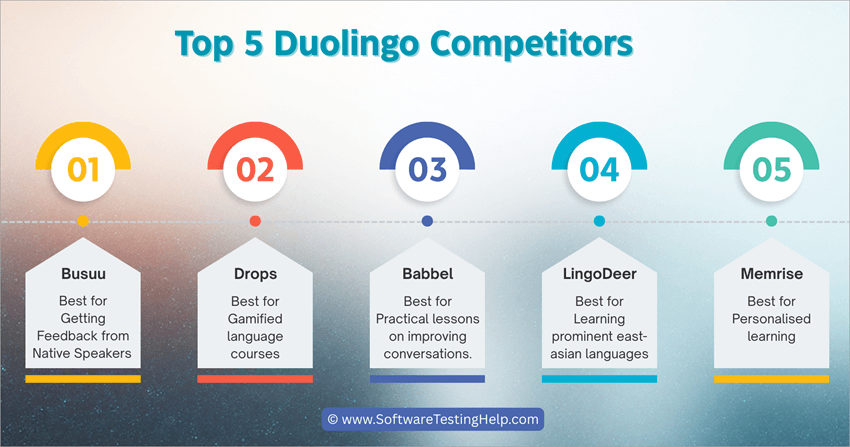
Comparing the Top Duolingo Competitors
| Name | Best for | Languages Available | Price | Rating |
|---|---|---|---|---|
| Busuu | Getting Feedback from Native Speakers | 14 | Starts at $12.99/month | 4.5/5 |
| Drops | Gamified language courses | 50+ | Starts at $10/month | 4.5/5 |
| Babbel | Practical lessons on improving conversations. | 14 | Starts at $15.25/month | 4.5/5 |
| LingoDeer | Learning prominent east-asian languages | 19 | Starts at $14.99/month | 4/5 |
| Memrise | Personalised learning | 23 | Starts at $24.99/month | 4/5 |
#1) Busuu
Best for getting feedback from native speakers.
Busuu features language courses designed using the Common European Framework of Reference, aka CEFR. This makes the platform effective and reliable for learning around 14 different languages. This includes prominent European and Asian languages.
Its native-speaker feedback system is perhaps the platform’s greatest offering. This system lets native speakers assess any written or spoken exercise you take on Busuu.
Languages Available: 14 Languages
Features:
- Specialized written and spoken courses with an emphasis on grammar.
- Improve your communication skills with personalized grammar practice.
- Get feedback from fluent native speakers.
- Get end-of-level certification from Busuu that serves as a testament to your progress.
| Pros | Cons |
| User-friendly mobile app for iPhone and Android | The exercises aren’t that challenging. |
| Get rapid feedback from native speakers | |
| Flexible subscription plans with no ads | |
| Specialized courses developed using the CEFR |
How it Compares to Duolingo
The privilege of receiving feedback from real native speakers, rather than an AI, makes Busuu a better language learning app than Duolingo. It is also better than Duolingo for practising grammar. That said, Busuu isn’t completely free. Busuu also offers fewer languages than Duolingo.
Verdict: Busuu deserves the number one spot on my list because of its emphasis on grammar and practical speaking exercises. The courses you’ll find on the platform will help you communicate better in a language you wish to learn. Plus, you get feedback from native speakers, making the lessons even more effective.
Price: You can try Busuu free for the first 14 days.
Its premium plans are as follows:
- 1 Month: $12.99/month
- 6 Months: $9.33/month
- 12 Months: $6.08/month
Website: https://www.busuu.com/en
#2) Drops
Best for gamified language courses.
Like Duolingo, Drops significantly gamifies your language learning sessions. This makes the lessons fun and engaging. The emphasis of the lessons is more on improving one’s vocabulary and listening skills.
The platform also offers multiplayer learning sessions. This makes your language learning endeavors more exciting as you can compete with fellow Drop users and test your skills against theirs.
Languages Available: 50+
Features:
- Improve your listening skills via audio-only mode.
- Make lessons fun with several review tools, including Dojo, Quiz Mode, and Word Collection.
- Join the challenge to show your language skills.
- Test your skills in a multiplayer match.
| Pros | Cons |
| User-friendly mobile app for iPhone and Android | Lacks effective grammar lessons. |
| Over 50+ languages supported | |
| Offline mode | |
| Gameplay challenges |
How it Compares to Duolingo
Both Duolingo and Drops utilize gamification in language learning. They are both great options if you wish to expand your vocabulary and improve your listening skills. Drops is a much better platform if vocabulary is your primary goal. Duolingo fares well for folks who want to practice their writing and speaking skills.
Verdict: Drops is one of the best gamified language apps out there. It is excellent when it comes to lessons that emphasize one’s vocabulary. The multi-player challenges make your lessons fun and exciting. With over 50 languages supported, this is undoubtedly one of the best Duolingo alternatives we have today.
Price: Drops offers a free version with many limitations. For the best experience, I would suggest opting for any of the following premium packages:
- Monthly: $10/month
- Annual: $3/month
- Lifetime: $160
Website: https://languagedrops.com/
#3) Babbel
Best for practical lessons on improving conversations.
Babbel features structured and very practical language courses that can help you improve your communication skills. The platform may lack gamification features similar to Duolingo.
However, it more than makes up for it through tailored course material that is very effective in boosting one’s language proficiency levels. Besides tailored courses, you also get feedback in real-time. You can track your progress with visualised metrics.
Languages Available: 14
Features:
- 2-minute short stories to teach your phrases.
- Podcasts for specific languages are available.
- Cultural bites to let you learn interesting cultural details of the language you wish to learn.
- Interactive learning courses and sessions include multiple-choice questions, fill-in-the-blank, and flashcards.
| Pros | Cons |
| Tailored interactive courses | Can be expensive |
| Real-time feedback | |
| Amazing interface | |
| Access up to 80 lessons for free |
How it Compares to Duolingo
While Duolingo takes a gamified approach to language learning, Babbel’s courses feel practical and laser-focused on improving one’s conversational skills. That said, Babbel only offers courses in 14 languages, with most of them being European. Duolingo is diverse when it comes to languages.
Verdict: Babbel is best for people who want to master their grammar and communication skills. You’ll find structured, tailored courses in 14 languages on the platform.
These courses do a good job of helping you improve your writing, speaking, and reading skills. The podcast and short-stories-based teaching also make the platform rather unique.
Price: Depending on the language you select, you’ll have access to up to 80 lessons for free. However, Babbel is at its best when you subscribe to its premium plans.
- 3 Months: $15.25/month
- 6 Months: $13.45/month
- 12 Months: $8.95/month
- Lifetime: $299.99/month
Website: https://www.babbel.com/
#4) Lingodeer
Best for learning prominent East Asian languages.
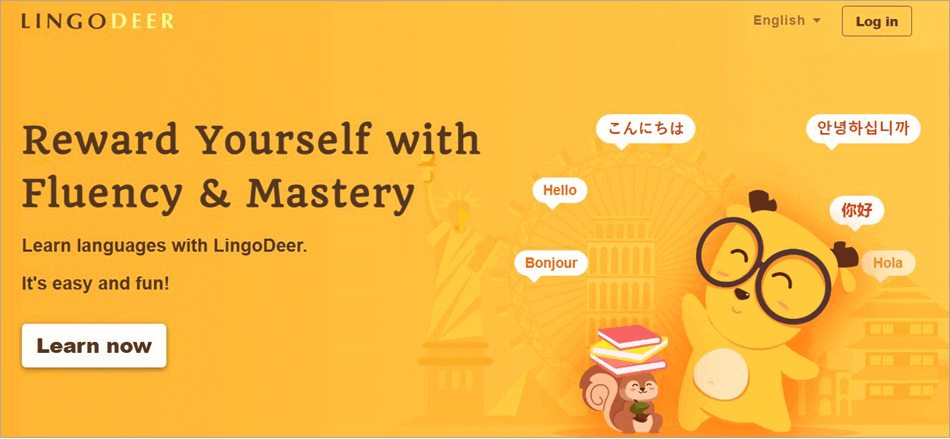
Lingodeer features courses on almost all prominent east-asian, some European, and Arabic languages. You are provided with a curriculum crafted by seasoned language teachers focusing heavily on grammar. Similar to apps like Duolingo, Lingodeer also gamifies the courses.
You’ll find audio-listening activities to improve your speaking skills and a variety of other engaging games to enhance both your writing and vocabulary.
Languages Available: 19
Features:
- Interactive games make lessons fun and engaging.
- Built-in flashcards to improve grammar and vocabulary.
- Improve speaking and listening skills with audio recorded by native speakers.
- Hundreds of stories in various languages to help practice speaking.
| Pros | Cons |
| App for iOS and Android | The platform is expensive |
| Audio-based lessons recorded by native speakers | |
| User-friendly interface | |
| Flexible subscription plan |
How it Compares to Duolingo
As far as Duolingo competitors are concerned, LingoDeer is the best for gamified, structured courses. It is similar to Duolingo in that respect. I believe LingoDeer is a bit better at helping one master listening and speaking skills, thanks to its audio-based courses, which are all recorded by native speakers rather than an AI.
That said, Duolingo has more languages. LingoDeer is also more expensive than Duolingo.
Verdict: LingoDeep earns a spot on this list because of its courses, which are structured and tailored by seasoned language teachers.
You can rely on these courses to master grammar, listening, and speaking skills with ease. I especially enjoy the native-speaker audio-based learning feature. This makes the platform one of the best Duolingo alternatives with no AI.
Price: LingoDeer offers the following subscription plans:
- Monthly: $14.99
- Quarterly: $39.99
- Yearly: $95.99
- Lifetime: $199.99
Website: https://www.lingodeer.com/
#5) Memrise
Best for personalized learning.
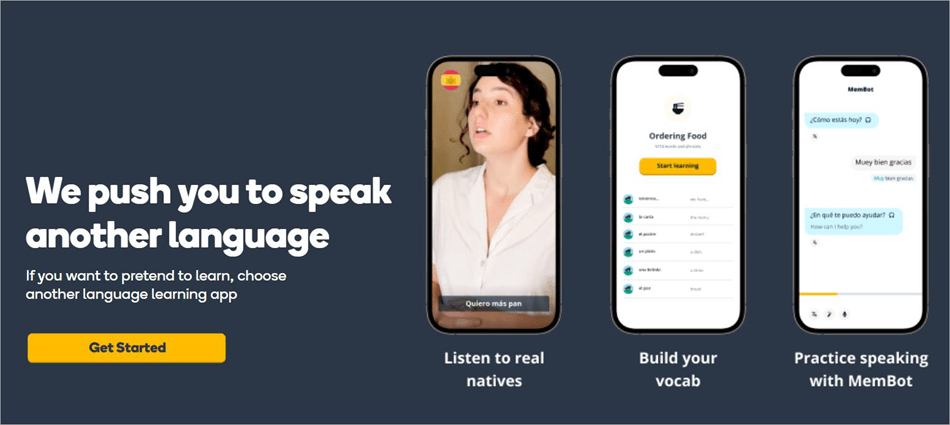
Memrise offers you a great language learning app with courses personalized to your preferences and skill level. You are asked to set a level as soon as the app is launched. You specify your purpose of learning, and Memrise will set you up with a course that aligns with that goal.
You are provided with videos featuring native speakers. You can refer to these videos to practice listening and speaking.
Languages Available: 23
Features:
- Personalized AI language tutor to help you practice speaking.
- Native speaker videos to help you practice listening.
- Gamified tests to train language skills.
- Personalized review plans based on proven memory techniques.
| Pros | Cons |
| Free plan available | Very expensive premium plans |
| Role-play sessions | |
| Cultural and language tips | |
| Flexible subscription plans |
How it Compares to Duolingo
Memrise has an advantage over Duolingo when it comes to offering personalized courses. You set your level and train accordingly, which is not the case with Duolingo. You’ll also find native speaker videos on the platform, unlike Duolingo, which is largely AI-driven.
On the flip side, Duolingo’s gamified approach to vocabulary training is much better. Plus, Memrise’s expensive subscription plans can turn people off. Duolingo’s free version is also better than Memrise’s
Verdict: Memrise makes it to my list for its emphasis on personalized courses. You’ll find tailored courses for up to 23 different languages on the platform, which you can practice with the help of native speaker videos, phrasebooks, and an intuitive AI bot.
It is very expensive, though. I would advise using the tool’s free plan to gauge your interest before paying for it.
Price: Free to use in a very limited capacity.
Its premium plans are as follows:
- Monthly: $24.99/month
- Annual: $61.99/year
- Lifetime: $329.99
Website: https://www.memrise.com/en-us/
#6) Mondly
Best for the Android and iOS apps.
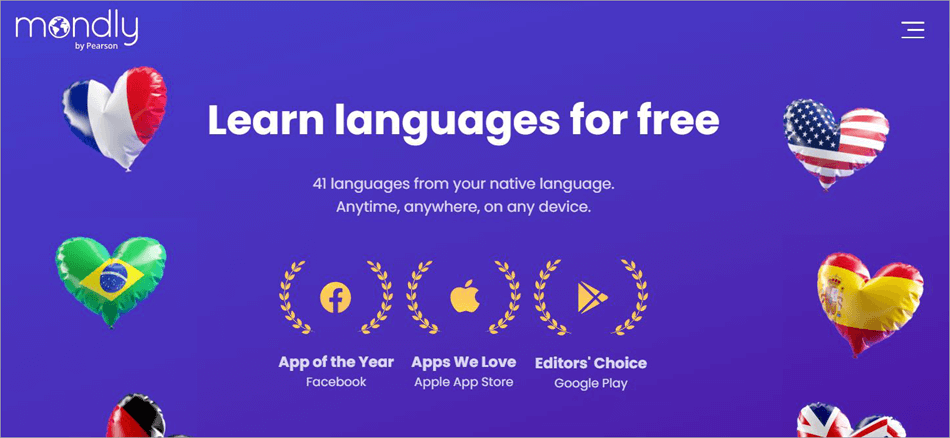
Mondly has the best-looking and functioning language learning apps when it comes to Duolingo alternatives. Once you look past the app’s striking design, you are met with impressive gamified features that will help you learn your desired language in a fun manner.
Mondly features a smart chatbot. You can use this chatbot to practice real-world conversations. You’ll also find real-life dialogues recorded by native speakers. Listening to them can help you improve pronunciation. If you are looking for the best chatbots, then please check out the detailed guide on the Top AI Chatbots.
Languages Available: 41 languages
Features:
- Games to help you train in languages.
- Native speaker dialogues to improve pronunciation.
- A chatbot that can improve your conversational skills.
- Get instant feedback through voice recognition and chatbots.
| Pros | Cons |
| Great app for Android and iOS | Lacks grammar instructions |
| Interactive practice sessions | |
| Learn from professional fluent speakers | |
| Excellent repetition system to help you remember lessons |
How it Compares to Duolingo
The gamification in Mondly is similar to that of Duolingo. The streaks and leaderboard system make Duolingo a more competitive app. That said, I think Mondly is a better app if you want to focus on improving your conversational skills, thanks to the platform’s speech recognition system and interactive lessons.
Verdict: Mondly excels due to its amazing mobile app, which you can rely on to master conversation and listening skills in over 41 languages. The interactive lessons and real-life dialogues make the platform worth trying out. That said, I wish the platform offered better grammar-focused lessons.
Price: Mondly offers the following subscription plans.
- Monthly: $12.90
- Annual: $61.92
- Lifetime: $120
Website: https://www.mondly.com/
#7) Ling
Best for learning underserved languages.
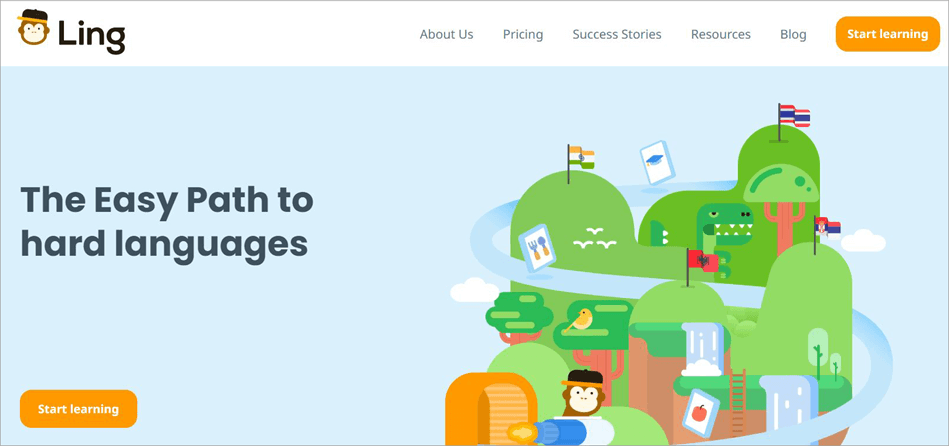
Ling is a different beast on this list. Unlike Duolingo or the tools mentioned above, Ling is considered the best app to learn hard languages. By hard, I mean underserved languages like one wouldn’t normally want to master.
The platform has structured courses that can help you master listening, writing, speaking, and vocabulary. The exercises are intriguing, and you are graded based on your progress.
Languages Available: 60
Features:
- Courses made and reviewed by native speakers.
- Immersive lessons to help master all 4 language skills.
- Mini games and exams to review one’s skill and progress.
- Cultural notes on all languages taught on the platform.
| Pros | Cons |
| Ideal for underserved lessons | Not ideal for learning Western languages |
| 24/7 support | |
| 30-Day money-back guarantee | |
| Smart chatbot |
How it Compares to Duolingo
Ling excels at offering structured courses that can help you improve all 4 language skills. The platform features courses created and reviewed by native speakers, which is not the case with Duolingo. Duolingo fares well when it comes to its gamification aspect, a feature that’s lacking in Ling.
Verdict: If you want to learn underserved eastern languages like Bengali, Assamese, or Cantonese, then Ling is the perfect app for you. You’ll find structured courses made by native speakers in over 60 languages on the app. The lessons themselves are beginner-friendly.
Price: Ling offers the following subscription plans:
- Monthly: $14.99
- 3 Months: $29.99
- Annual: $79.99
Website: https://ling-app.com/
#8) Rosetta Stone
Best for speech recognition tech.
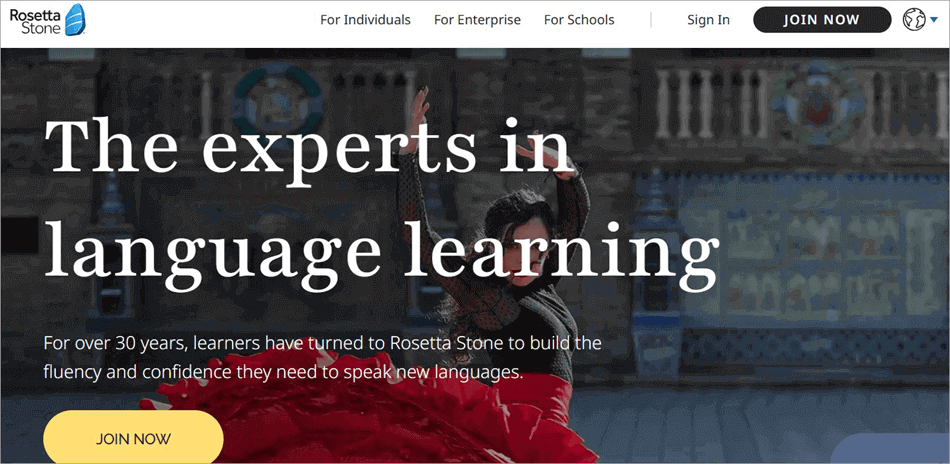
Rosetta Stone earns a spot on my list because of its proprietary speech recognition technology. You can rely on this tech to tell you just how well you spoke each phrase or word, thus helping you improve your speaking as well as pronunciation skills.
The lessons on Rosetta Stone tend to be very immersive, thanks to interactive sessions that also feature audio from native speakers.
Languages Available: 25+
Features:
- HD Audio recorded by native speakers.
- Speech recognition tech that assesses your pronunciation.
- Stories read by native speakers and a phrasebook to boost your conversation skills.
- Come face-to-face with a real-life tutor in 25-minute live-streamed classes.
| Pros | Cons |
| Downloadable lessons | Lacks proper grammar instructions |
| Stories read by native speakers | |
| Live lessons | |
| Immersive courses |
How it Compares to Duolingo
Unlike Duolingo, Rosetta Stone relies on native speakers and an advanced speech recognition tech to train its users. This makes Rosetta Stone better than Duolingo when it comes to mastering conversation skills. However, Duolingo features more languages and is less expensive.
Verdict: Rosetta Stone should be on your radar if you wish to get better at speaking or reading a particular language of your choice. The platform stands out for its advanced speech recognition tech and reliance on native speakers. That said, the platform is expensive, and some users may be bothered by the lack of proper grammar instructions.
Price: Rosetta Stone offers the following plans.
- 3 Months: $14.95/month
- 12 Months: $10.95/month
- Lifetime: $219
Website: https://www.rosettastone.com/
Free Vs. Paid Language Learning Apps
There are very few language learning apps out there that offer their services for free. Those who do offer do so with many limitations imposed. Free apps impose restrictions on how many lessons you can take at a time or how many languages you can learn simultaneously.
You’ll also have to contend with ads. On the other hand, paid apps let you enjoy the service ad-free and employ all of its features. You’ll have to choose between monthly, annual, or lifetime subscriptions.
If your goal is to learn a single language or simply test out a tool, I would suggest you use free versions of the app. However, if you wish to master a language, it will be in your best interest to go with the premium version of the app.
Frequently Asked Questions
1. What is the best alternative to Duolingo?
The answer to this question will vary, depending on who you ask. In my opinion, the following are some of the best alternatives to Duolingo out there.
• Busuu
• Drops
• Babbel
• Memrise
• LingoDeer
2. Is Babbel better than Duolingo?
When it comes to Babbel vs. Duolingo, both have their merits. I think Babbel is a much better platform if you wish to improve your conversational skills. It has courses that are more practical in nature. However, Duolingo has more languages to offer and is better if you wish to expand your vocabulary.
3. What is the #1 language learning app?
Based on general public reception, popularity, and downloads, Duolingo is considered the number one language learning app by a mile. Its free-to-use, bite-sized gamified lessons have made it a favourite of many around the world. The app is universally praised, and its cumulative downloads have reached a whopping 960 million in 2025.
4. Is Busuu or Duolingo better?
I personally believe that Busuu is a much better app than Duolingo, as it features structured courses that were created using the CEFR system. The platform also lets you gather feedback for your writing and speaking tests from native speakers, which gives it an edge over Duolingo. That said, Duolingo is better than Busuu when it comes to language library and gamification.
5. Is Memrise better than Duolingo?
Well, it depends on who you ask. Memrise lets you personalise your language lessons, which is not the case with Duolingo. You also get native-speaker videos with Memrise to help you improve your conversational skills. On the flip side, Duolingo offers more languages and is relatively cheaper.
Conclusion
There you have it, the best alternatives to Duolingo, in my humble opinion. At the end of the day, what app you consider to be best will depend on your particular goals. If you wish to get better at grammar and conversation, then Bussuu would be a better alternative for you.
If you seek interactive lessons and wish to expand your vocabulary, then Drops is the app you should check out. If you wish to get better at listening and speaking, then LingoDeer could be worth your time and money.
No matter the goal you wish to achieve or the language you aspire to master, I’ve made sure to include an app here that will cater to your desires.
There are plenty of language learning apps out there that are better than Duolingo in more cases than one. So, I suggest you refer to my article and look beyond Duolingo to train and improve your writing, speaking, listening, and comprehension skills in whatever language you wish to learn.
Research Process:
- We spent 32 hours researching and writing this article so you can have summarised and insightful information on which Duolingo alternative will best suit you.
- Total Duolingo competitors researched: 18
- Total apps shortlisted: 8
For more learning-related guides, you can explore our range of tutorials below:
- Best Free Online Plagiarism Checker Tools
- Best Learning Management Systems
- Top 11 Online Training Software For Hassle-Free Training
- Top APIs for Learning Management Systems (LMS)
- BEST Grammarly Alternatives For Error-Free Writing
- Top Sentence Rephraser Tools to Look for
- Best Grammar Checker Platforms for a Speedy Revision
- Top-Rated Punctuation Checker Applications
- Best Essay Checker and Corrector for Beginners
- Top Online Proofreading Tools of the Year
Was this helpful?
Recommended Reading
-

Explore the top Learning Management Systems to manage your learning programs easily. Pick the best LMS tool to identify learning gaps across your organization and empower your business culture: Do you know what the meaning of LMS “Learning Management System”? Let us take a look at the meaning of each…
-

Unveil the hidden language of emotions through AI with Speech Emotion Recognition (SER) using machine learning. Discover the nuances in human speech with SER to detect various emotional states in real time: Leveraging artificial intelligence to predict human emotions from an audio signal is known as speech emotion recognition. Voice…
-
Discover the most powerful APIs for Learning Management Systems from this guide. Gain expert insights and knowledge on various implementation strategies to enhance your EdTech development skills: Learning Management Systems, aka LMS, have forever revolutionized how educational and training programs are planned and delivered. They’ve compelled our educational institutions to…
-
Detailed Review & Comparison of the Top Grammarly Alternatives with Features & Pricing. Select the Best Alternative to Grammarly for Flawless Content: Grammarly is one of the most popular and widely used software tools for grammar checking, spell checking, and plagiarism checking. With Grammarly, your writing becomes flawless and simplified…