


Being an excellent communicator as a tester is important for success. We will explain the 4-step process in achieving effective communication skills.
Hello my dear readers, Hope you are all in the pink of health and are enjoying Testing! I am also doing great and excited to share some interesting points with you about effective communication skills and how to achieve them.
Read the introduction of this article given above again before going ahead. I could have also written the same in this way:
The topic of today’s discussion is “Effective Communication Skills” and how to achieve it.
What do you think will create more interest in the readers? I know the first option sounds better and that explains the need for better communication skills.
I will be sharing a few thoughts/tips on communication skills today.
Table of Contents:
Become An Excellent Communicator As a Tester
One of the requirements in any job advertisement that always grabs my attention is “Must Have Excellent Communication Skills”. I rarely see a job profile that does not ask for a good communicator. All businesses need Effective Communicators. Communication skills are second-important after technical skills in a job ad.
The simple three words “Excellent Communication Skills” carry a lot of questions, such as:
- What does Effective communication mean?
- Why is it so important that every job requirement list is incomplete without it?
- How do you decide if you are an excellent communicator?
- How to improve your communication skills?
- And finally, how do you feel confident that “I am an excellent communicator”?
In this article, I will answer these questions with the help of some real life scenarios.
Let’s start with a few basic concepts:
What is Communication
- Communication is the act of conveying a message to another person through a mutually understandable medium/language.
- Communication means an exchange of information between two or more people.
- It is a process of sharing information, ideas, feelings, news and achieving a common understanding between people.
- Communication connects people.
- For organizations, communication helps all departments work together.
What are the different Types of Communication
The following diagram says it all:
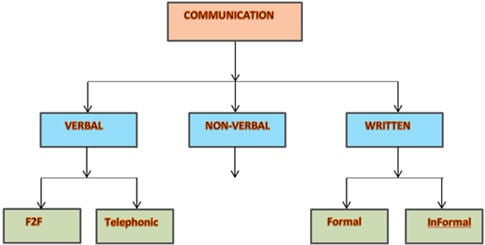
1) Non-Verbal Communication: Non-Verbal communication is conveying information using non-word messages such as posture, gestures, facial expressions, eye contact, etc. It plays a significant role in conversations, meetings or even interviews.
However, this is not the topic of discussion for today’s article. We will move right along to the next category.
2) Written Communication: It is communication through written symbols. When the verbal and non-verbal modes don’t suffice we write things down. This way the information gets recorded as well and is more accurate and formal.
Writing skills are very important for Software Testers. We have to write several status/bug reports and many test artifacts to communicate with various teams – Both formally and informally.
3) Verbal or Spoken Communication: A way of communication through words (language) or sounds is verbal communication. The easiest way of expressing our thoughts, ideas and feelings is by talking. Hence, it is the simplest and most effective. This could also be formal (a face to face meeting at work OR a telephonic interview OR conference call) and informal (casual coffee room chat with a colleague).
In today’s article, the focus is more on Verbal communication.
Why do we need effective communication
Communication is an art and every professional must learn it to be successful. It helps you maintain good relationships and expand your network.
Let’s take a quiz. Please answer the questions below with a YES or NO.
- I often don’t get the desired response even if I think I am communicating my queries right
- I use speech fillers like Uhh or Umm frequently
- I get nervous about addressing large groups of people
- It takes time for me to start a conversation
- I get nervous while facing or conducting interviews
- I don’t know how to put my thoughts clearly in a meeting
- I am often asked to repeat myself
- I find it hard to state my opinion clearly
- I often lose focus when the other person is talking
- I cannot say NO even though I want to.
- It’s difficult for me to maintain eye contact during a conversation
- I slouch or keep my head down or make nervous gestures while talking
- I speak with a very low or high volume
If your answers are mostly YES, it is time to work on your communication skills.
How to Become an Excellent Communicator
Improving communication skills may be a hard task but it can definitely be achieved through continuous practice.
Here are a few suggestions. Remember it’s a journey and it is important to take few steps every day.
#1) Become a good Listener:
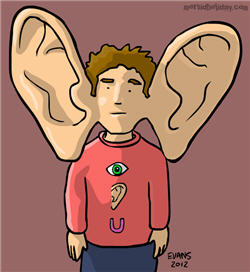
Communication is a two-way process. Listening is equally as important as speaking. We must practice listening and not merely hear things.
Real Life Scenario:
The tester is a key participant in the requirements discussion meeting. Make the most of it by following the tips below. The advantages are twofold. You get better at understanding the system and your participation will earn points with your manager and make a good impression.
Tips to become an active listener –
- Pay attention and ask questions
- Seek confirmation when in doubt. For example, ask “So what you mean to say is” or “Please confirm if I understood this correctly”.
- Make eye contact with the speaker
- Nod, smile and keep a positive posture
- Provide positive feedback
- Contribute when you can
#2) Become a confident Speaker:

Real Life Scenario:
Opportunities for a tester to participate in an engaging formal discussion or conversion are unlimited. Defect triage meetings, review sessions, etc happen pretty much every day. Ace them with the following tips.
Tips to become a confident Speaker –
- Believe in yourself
- Don’t be hesitant. Have faith in your inputs and ideas
- Think before you say anything.
- Make eye contact with others. This increases the chances of receiving an affirmative response.
- Watch your pace and slow down if needed.
- Watch your pronunciation. Speak loud and clear. If you are unsure about the pronunciation, choose another parallel word rather than pronouncing it wrong.
- Practice small conversations.
- Try not to confuse your audience with mixed messages. Your words should be aligned with your body language, facial expressions, and tone.
- Know your words before using them. If you are not sure about the meaning, avoid using it. Make it a practice to learn a new word every day.
- Say what you want to convey clearly.
- Positive body language is also an important factor. Relaxed arms at your sides suggest that you are approachable and open to having a discussion whereas crossed arms and hunched shoulders suggest the opposite that you are reserved and not willing to have a conversation.
- Positive and appropriate posture can make even difficult conversations flow more effortlessly.
- Learn to give feedback positively but without hesitation.
- Attempt to resolve conflict
#3) Improve your Presentation Skills:

Real Life Scenario:
Once again, all the above-mentioned meetings can benefit from a good leadership and presentation.
Tips to Improve your Presentation Skills –
- Have all the material ready before hand.
- Always have the agenda set and handy. Direct the meeting in a way that it remains on track and you reach your goal by the end of the meeting.
- Encourage interactive participation. Ask questions such as “What’s your opinion about this?” or “Do you think it’s a good idea?”
- Learn to read your audience’s reactions and behavior. Similarly, keep control over your own reactions and behavior.
- Try to practice assertive ways while speaking as well as in written communication.
- During Defects Status Meetings – remain calm and unbiased while explaining the defects. Keep the conversation flow positive. Explaining the defect to the developer is equally important as finding it. Always avoid being personal in such meetings.
- Practice your gestures. While presenting, make sure your whole body talks.
- Good and appropriate use of humor is also a key factor
- Practice Empathy. It is putting yourself in other people’s shoes. Try to understand the point-of-view of others. Be open to new ideas.
- Learn to take criticism positively.
#4) Improve your Telephonic Conversations:

Real Life Scenario
Telephonic Interviews are as common as day and night for IT teams.
Tips to Improve your Telephonic Conversations:
- In a telephonic conversation the other person is not able to see your expressions; hence, it becomes more difficult to explain yourself.
- Always greet the person at the other end before starting your conversation.
- Always introduce yourself even if the person is expecting your call. Say your name very clearly.
- Explain the purpose of the call at the beginning
- Be very clear in what you are saying. Be concise.
- Do not take long pauses.
- Pause when necessary
- Do not interrupt. Let the other person speak too.
- Have a notepad ready while you are on the call to note down any necessary details.
- At times, speech fillers like umm sound very irritating over the telephone. Try to avoid it.
- Use your words more wisely if you don’t know the other person.
- Have a positive tone.
- Always end the call with a thank you note.
In summary:
- Be attentive and good listener.
- Be clear and loud in a conversation.
- Speak up confidently in all meetings.
- Do not hesitate to express yourself.
- Show empathy
- Make eye contact whether you are speaking or listening.
About the author: This is a guest article by Renuka K. She is having 11+ years of Software testing experience.
Thanks for reading. Feel free to post any questions/thoughts in the comments section below. Your valuable feedback is appreciated. Happy Testing!
Was this helpful?
Recommended Reading
-

This knowledge quiz is an attempt to test your Software Testing basic knowledge with a simple 20-question test. The following Software Testing quiz is designed to test your ability to meet Software Testing requirements. This Software Testing quiz will help you with self-assessment and prepare for other certification exams, as…
-

This tutorial will explain the top Software Testing Skills for guiding you on how to become a skilled software tester: Software Testing or QA is the best area in the IT industry that many newcomers use for their initiation into a software career. This is despite the fact that some…
-
Software Testing Course Syllabus and Training Plan Week 1 Brief introduction to software systems and SDLC Basic concepts Basic Testing Vocabulary Quality Assurance versus Quality Control The Cost of Quality Software Quality Factors How Quality is Defined Why Do We Test Software? What is a Defect? The Multiple Roles of…
-
Do you know why you are not getting job in software testing and quality assurance even you are trying for so many days? Well, here are the 10 reasons why you are not getting job in software testing. Think on these points. Probably you might get the answer - Why…


it looks like all testers are indians…
Really very helpful article,thanks for sharing.
Nice Article, worth reading it and all points are very useful thanks 🙂
Suggestion: Post and article on how to deal with people to convey difficult messages or How to survive in workplace politics.
Hi this article is really helpfull for me and others also
i just want to say thank you for this article
I regularly read articles in STH. This is a very valuable article for everyone, as communication skill is the most important skill in all the professions and everywhere.
While is article is good- it doesn’t go into how to develop these qualities in yourself. It would be better to have action items as to how and what to practice to achieve these qualities.
It was very useful for me, Thank you
Thanks a lot all for reading my article. I am very grateful for the comments . As always happy to share good learnings !
Keep reading STH and Happy Testing!
Really.. This is the very good article for improving the communication skill. Very thankful to Renuka to share this article.
Very useful information and thanks for the information. You actually have done your job when you shared the topic effectively. And you distinguish about boring communication and effective communication.
Hi these are nice tips helpful for everyone
Very good article and nice tips to improve communication… Thanks….
Article about communication skills is very nice. Good to read and learnt few points form this.
Happy to see more articles.
It is very good those who are interested to develop theire communication it is very help full thank u
aReally I am very much satisfied with your website. It’s indeed very useful and informative website for freshers who are willing to learn manual testing. However you should ellaborated each topic more deeply with a little bit details.Otherwise very good.
Very useful article. Can help many testers in their professional career.
Implementation is more important. The things which are told here needs to be implemented practically to have effective communication.
It’s one of the necessity in all profession these days. In case your English is not very good you can install grammarly chrome extension. I helps in improving english
Thank so much for your favor recommend.
It is very useful and informative artical. I would suggest if you provide more partical execrise it will be really helpful for the learners.
This article is very useful for every one to improve ur communication skill.
Very helpful indeed!
Thanks to Gaurav Khurana
Thank You Renuka for sharing this article. Its very helpful.
Hello Renuka,
Thanks a lot for sharing nice tips, it will be very helpful to improve communication skill……
Thanks a lot again…….