Stop wasting time and run smarter meetings with our top Meeting Agenda Templates. Read our step-by-step guide to learn how to write Meeting Agenda in minutes for productive meetings:
Meeting Agenda Templates are basically blueprints that you can use repeatedly to spearhead your business meetings. They give your meetings direction, with goalposts to hit along the way.
A proper template clearly defines who’ll present, what will be presented, when decisions will happen, and how action items will be tracked. You can read countless books on meetings to organize one that hits it out of the park. My favorite on this topic would be “Meetings That Get Results” by Bryan Tracy.
Top Meeting Agenda Templates For Effective Meetings
Yet you would still struggle to lead a meeting without a proper agenda in place, even if it does not devolve into chaos.

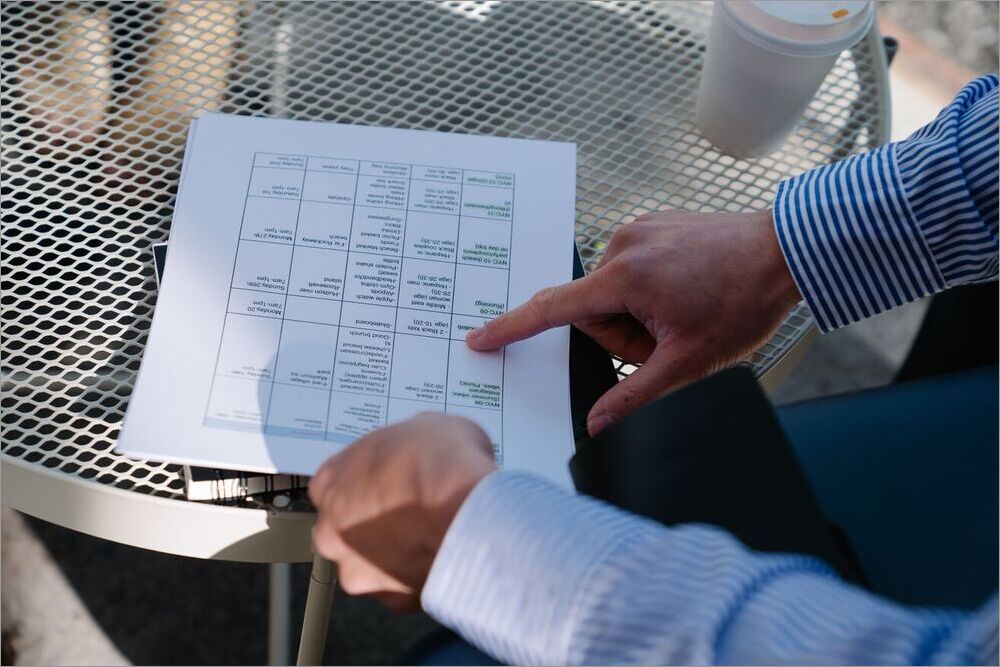
[via Pexels]
Of course, my goal with this article isn’t simply to tell you what a meeting agenda template entails. Consider this comprehensive guide to creating templates for a variety of meeting scenarios.
Watch this video to learn about effective meetings with an agenda and preparation.
So, without much further ado, let’s dive in.
Importance of a Meeting Agenda
Those who’ve been attending meetings without an agenda may doubt the necessity of having one. You don’t understand just how easy your life would be with a meeting that feels structured, something an agenda does.
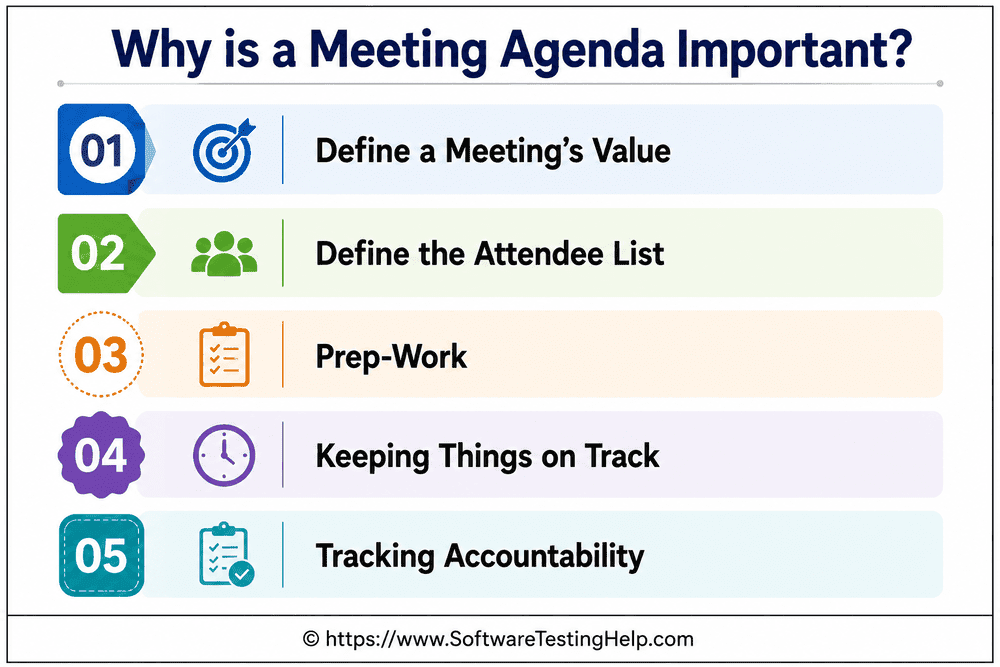
#1) Define a Meeting’s Value
Let’s face it. Not all meetings end up being important. I am speaking from experience, of course, having attended countless meetings on topics that could very well have been discussed over email.
An agenda lets you measure the value of a meeting. It tells just how important a meeting is or if it is a giant waste of time that’s best avoided. An agenda will also help you realize the value or contributions you can make to a meeting.
#2) Outline the Attendee List
Not everybody needs to be present in a meeting. Yet, I can’t tell you how many times I’ve accepted invites to a meeting that could’ve existed or even thrived without my presence anyway. An agenda will tell me whether a meeting is worth attending.
It will tell you who to invite to a meeting. For example, if you are going to have a meeting to discuss an imminent product launch, it would be wise to send an invitation to everyone in your team closely involved with the production and marketing of that product.
#3) Prep-Work
An agenda can also help you better prepare for the meeting. You know exactly what needs to be discussed, what questions need to be answered, and what queries need to be resolved.
For example, if the meeting is about the promotion of a new product, the marketing team will come prepared to discuss the various strategies they can use to gain traction. Knowing the purpose of a meeting will help you research the topic beforehand, thus no time is wasted on discussing irrelevant things.
#4) Keeping Things on Track
Without an agenda, your meeting could end up like a headless chicken. Discussions could wander off on a tangent completely irrelevant to the topic at hand. Before the meeting, agenda templates provide your meetings with a much-needed sense of direction. Everybody attending the meeting knows what the goal is.
Even if the discussions start wavering into uncharted territory, you can immediately rein them in and save everyone some precious time.
#5) Tracking Accountability
Let’s say there’s a meeting to discuss the budget approval for marketing. An agenda template will clearly lay out who will be responsible for what. For example, who will handle the data, who will have signing authority, and who will track the budget’s implementation?
With roles clearly designed, everybody owns their responsibilities and becomes accountable for their actions.
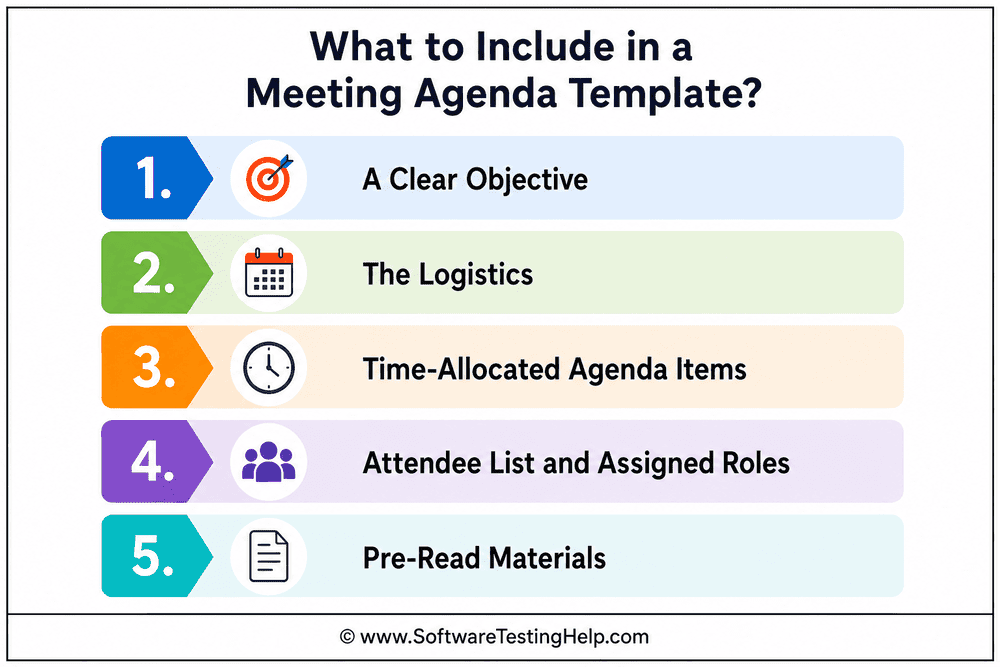
What to Include in a Meeting Agenda Template
You know what they say: get the basics right, and you can accomplish anything. This applies to everything you are creating, including the meeting agenda.

Effective meeting agenda templates must include the following components:
| Key Elements | What it Could Entail | Example |
|---|---|---|
| Structure | Bulleted lists | Defining Attendees, Topics to discuss, and a time-boxed schedule. |
| Purpose | Defining a clear goal | To discuss Q4 Budget. |
| Preparation | Pre-read material | Research paper or website. |
| Outcome | Decisions made with action items assigned | Team Member 1 would be responsible for leading the project |
| Follow-Up | Summary and meeting minutes | Defining measures to track progress. |
#1) A Clear Objective
For what purpose is a meeting being called? Your meeting’s objective must be clear to all. Your agenda template must have the meeting’s objective clearly mentioned. A single sentence would suffice.
#2) The Logistics
Once the purpose is clear, you’ll need to clarify the meeting’s schedule and other details related to its logistics.
For instance, an agenda template must include the following:
- Date
- Duration
- Location
- Video Link
- Meeting type (Brainstorming or Information Sharing)
All of these details are crucial components, and without them, your meeting agenda is simply incomplete.
#3) Time-Allocated Agenda Items
You don’t have to include this component in the agenda, but including it anyway is only going to result in a smoother meeting. Allocating a fixed time to discuss a specific topic will ensure that your conversation isn’t being hijacked by a single issue.
For instance, you could block time for specific issues in the following way:
- 10 minutes for project updates
- 15 Minutes for budget discussion
- 10 Minutes for risk assessment
Setting these time blocks can help you steer the meeting in a more organized fashion, thus ensuring no valuable time is wasted.
#4) Attendee List and Assigned Roles
Your meeting agenda must mention the names of all people attending the meeting. It should also mention who will be responsible for what.
For instance, clearly mention:
- Who will be responsible for tracking time?
- Who will be responsible for taking notes?
- Who will be the topic owner?
- Who will be the facilitator guiding the conversation?
#5) Pre-Read Materials
If you want attendees to come prepared, you could also mention the data or documents they could review before the meeting begins. Keeping the above basics in mind, you could conceive a board meeting agenda template that looks something like this:
Sample Board Meeting Agenda Template
Ralph Co. Board Meeting
Agenda
- March 28, 2026
- Time: 11:00 AM
Attendees
- Julian
- Mark
- John
- Sam
- Sarah
Objective: Review the past year’s performance.
Agenda Breakdown
- Progress Made (5 minutes)
- Upcoming Priorities (10 minutes)
- Roadblocks Encountered and Measures to Overcome Them (15 minutes)
- Project Updates (10 minutes)
- Action Items (10 minutes)
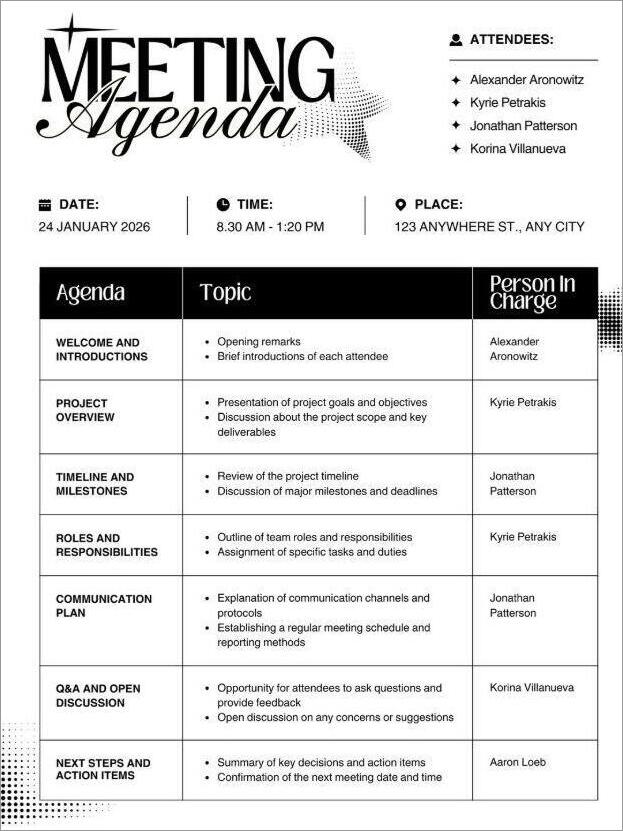
Thanks to platforms like Canva, you can create a visually unique meeting agenda that covers all the basics and looks something like this:
How to Write Meeting Agenda: Step-by-Step Guide
Now that we’ve covered the fundamentals, I am more confident in your ability to grasp the following process.
Step #1: Define the Objective
Kickstart your agenda by clarifying why a meeting is taking place. One line clearly stating the meeting’s purpose should suffice. Don’t keep the objective vague.
Step #2: Prepare the Participant List
With the objective set, you’ll now proceed to create the attendee list. Know who to call. Certain meetings require only a few important people in attendance. For instance, you don’t want a person from HR attending a critical meeting on product marketing. Figure out who will contribute the most value to your meeting and invite them only.
Step #3: Outline Topics to Discuss and Allocate Time-Blocks
Mention all the topics that must be discussed during the meeting to ensure you don’t forget something important. It will be easier to guide the meeting in the right direction if each topic is allocated a specific time block. For instance, we will spend five minutes discussing progress and then ten minutes discussing the issues plaguing your project.
Tips for proper time-boxing:
- Assign one person to track time
- Place a clock in the meeting room, preferably where it is visible to everyone attending.
- If off-topic ideas pop up, capture and keep them aside in a separate list for discussion later.
- Try to wrap up the meeting at the scheduled time. Schedule a follow-up if there are still things that need to be discussed.
Step #4: Assign the Topic Owner
Every meeting must have a topic owner. This will be the person responsible for creating materials for the meeting and leading certain parts of the conversation. You can have multiple topic owners and spread responsibilities among them for better efficiency.
With the meeting agenda ready, share it with all the participants. My advice would be to send this agenda 24 to 72 hours before the meeting begins. Attach pre-read material to the agenda if you must. This will ensure everyone has enough time to prepare before the meeting starts.
With the meeting agenda in place, you now have a clear idea of how to run a meeting.
Sample Meeting Agenda Templates
I’ve now clarified the basics and shown you how to write an agenda from start to finish. You can use this insight to prepare your own agenda. Below are meeting agenda formats/meeting agenda examples that I created by following the same process.
#1) Staff Meeting Agenda Template to Discuss Sales
Ralph Co. Staff Meeting
Agenda
- March 28, 2026
- Time: 10:00 AM
Attendees
- Sarah
- Johnathan
- Marcus
- Peter
- Amy
Objective: To discuss weekly sales and marketing performance.
Agenda Breakdown
- Reviewing and discussing agenda items (5 minutes)
- Weekly sales and marketing review (10 minutes)
- Discuss roadblocks and new strategies to combat them (15 minutes)
- Review action items (10 minutes)
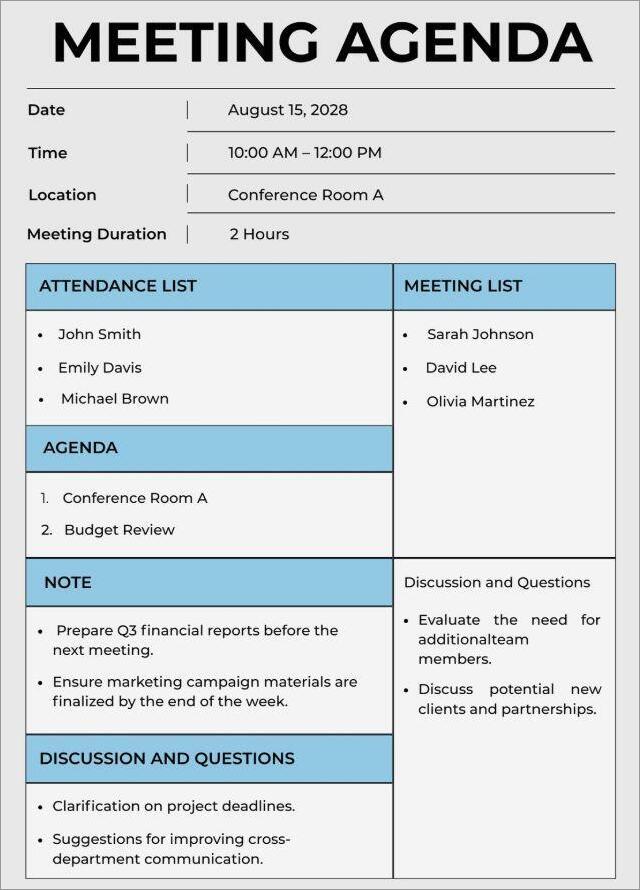
Here’s an example of a staff meeting agenda created on Canva with a ready-made template:
#2) Book Club Weekly Meeting Agenda
Agenda
- March 22, 2026
- Time: 3:00 PM
- Location: Josh’s House
Attendees and Their Responsibilities
- Josh: In charge of Food
- Ryan: Tracking Time
- Clyde: Handling Discussions.
- Valentine
- Pauline.
Objective: Weekly discussions on books read by the book club. New book recommendations.
Schedule
- Meeting commences with food and drinks (15 Minutes)
- Each person talks about the book they read (1 Hour)
- Discussion on the book read (30 Minutes)
- Next books to read (15 Minutes)
#3) Retrospective Team Meeting Agenda Template
Agenda:
- February 22, 2026
- Time: 5:00 PM
Attendees: Full Software Project Team
Objective: To discuss what went right and what went wrong with the recent software project launch.
Schedule Breakdown:
- Opening Conversation: 5 minutes
- Discussing what went well: 10 minutes
- Discussing what went wrong: 10 minutes
- Action Items: 10 minutes
- Appreciation round: 5 minutes.
#4) Business Review Meeting
Agenda: Feb 25, 2026
Time: 10:00 AM
Attendees: Entire Project Team
Objective: Quarterly and monthly review.
Duration: 60-90 Minutes
Schedule Breakdown:
- Reviewing performance: 20 minutes
- Assessing Goals: 20 minutes
- Market Analytics: 15 minutes
- Allocating Resources: 15 minutes
- Discussing Strategies: 15 minutes
#5) One-On-One Meeting Templates
Date: Mar 28, 2025
Time: 11:00 AM
Duration: 30 Minutes
Objective: Manager-Subordinate Check-in
Agenda Breakdown:
- 5 Minutes on Recalling Wins
- 10 Minutes on Discussing Current Projects
- 10 Minutes on Discussing Challenges
- 5 Minutes on Feedback
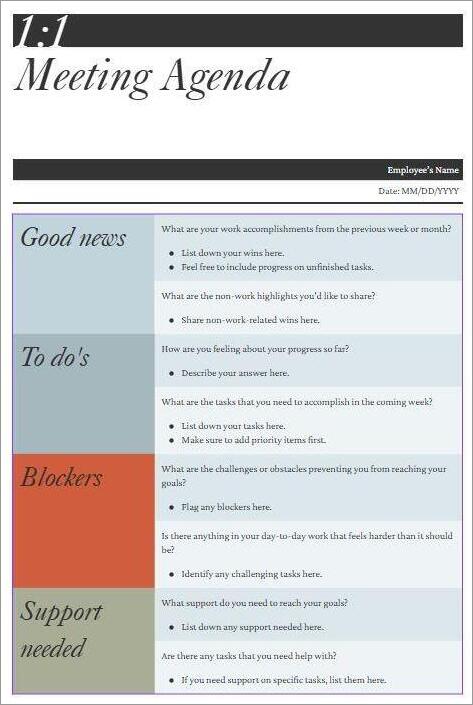
Example of a one-on-one meeting agenda created on Canva:
#6) Weekly Team Sync
Date: 21 January 2026
Time: 11:00 AM
Location: Conference Room
Purpose: Weekly sales performance review.
Attendees: Entire sales and marketing team.
Agenda Breakdown
- Recent Project updates: 5 minutes
- Priorities: 10 minutes
- Roadblocks: 10 minutes
- Shoutouts: 5 minutes
#7) Daily Standup/Scrum
Date: 22 January 2026
Time: 10:30 AM
Duration: 15-20 minutes
Purpose: Scrum Check-in
Agenda Breakdown
- What I accomplished yesterday: 5 minutes
- What I’ll be working on today: 5 minutes
- Impediments that need to be addressed: 5 minutes
#8) All Hands Down/Town Hall
Date: 23 Jan 2026
Time: 11:30 AM
Attendees: All company personnel.
Objective: Discuss the budget for the upcoming sales event.
Agenda Breakdown
- 11:30: Meeting Begins
- 11:35: Updates
- 11:45: Discussing updates on sales, marketing, HR, and logistics.
- 12:00: Q&A
- 12:15 Meeting ends
#9) Project Kickoff
Date: June 16, 2026
Time: 11:00 AM
Attendees: Project Team Leaders
Agenda Breakdown
- Topic 1: Discussing project background
- Topic 2: Assessing Project Scope
- Topic 3: Estimating Project Timelines
- Topic 4: Discussing Resource Allocation
- Topic 5: Assigning Roles
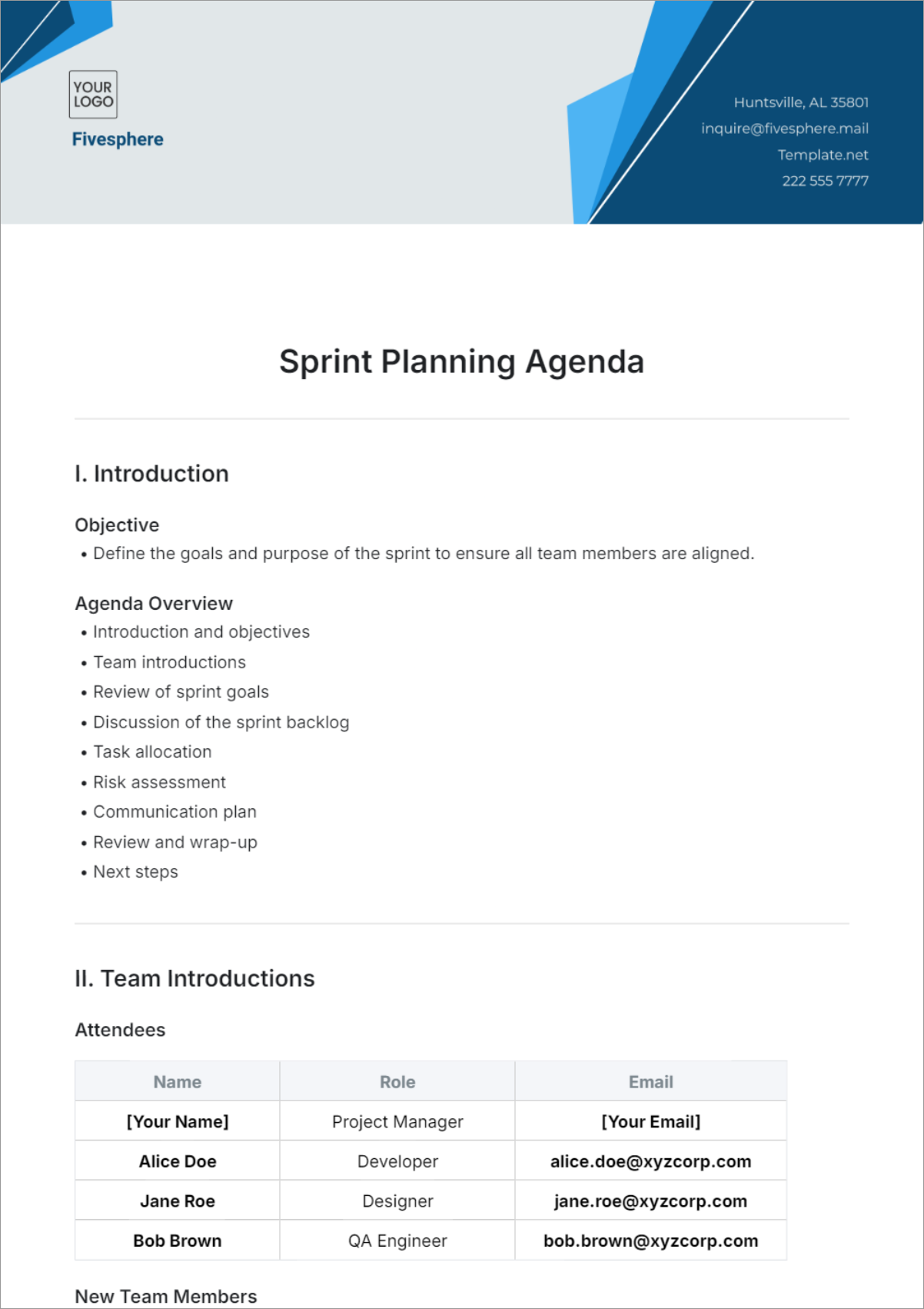
#10) Sprint Planning Agenda Template
The template below can help you create a good sprint planning agenda:
Frequently Asked Questions
1. What is a meeting agenda?
A meeting agenda can best be described as a roadmap that gives your meeting structure. It serves as an outline that clearly defines the objective of the meeting, the topics that need to be discussed, its participants, and its duration.
With a clear meeting agenda in place, you know what needs to be discussed, for how long, and who will be responsible for what.
2. What are the 5 Ps of a meeting agenda?
The 5 Ps here refer to the basics we just discussed in the article above. The 5 Ps entail the following:
• Purpose
• Participants
• Preparation
• Process
• Payoff
A successful meeting agenda will cover all of these 5 components.
3. How to create an agenda for a meeting?
It is simple to create an agenda for any meeting.
All you have to do is follow the process below step-by-step:
• Define the objective
• Create an attendee list
• Outline topics and allocate time for their discussion
• Assign a topic owner
• Share the agenda with all attendees and follow up.
4. What is the 40,20,40 rule for meetings?
The 40, 20, 40 rule basically tells you how a meeting should be structured. For instance, 40% of the meeting should be spent on preparation. The next 20% should involve active discussion on the core topic, and the final 40% should be given to post-meeting follow-up.
5. What is a meeting agenda template?
As the name suggests, meeting agenda templates are reusable blueprints that clearly define the purpose of a meeting and how it should be conducted.
A good meeting agenda template will mention its objective, names of participants, their roles, the topics to touch on, time-blocks for each topic, and action items to follow up on.
6. What are common mistakes to avoid when writing a meeting agenda template?
People often make the following mistakes when writing a meeting agenda template:
• Keeping the objective vague
• Stuffing the agenda with unnecessary information
• Not allocating time to each topic
• Not assigning a topic owner
• Not including pre-reading materials for reference
• Not assigning time to properly wrap up the meeting.
7. Where to create or store a meeting agenda?
You have several tools at your disposal for the efficient building and subsequent storing of a meeting agenda. For most people, Microsoft Word would suffice. You can write a simple agenda by sticking to the basics and processes I’ve dictated above. If you want to give your agenda a distinct visual style, then create a Canva account.
Canva has a ton of ready-made templates that you can use to create an agenda for a variety of meeting types. You’ll find both free and premium templates there. As for storing and sharing, there is no other place online that I believe to be better than your Google Drive.
8. What is the key difference between an agenda and a meeting minute?
When it comes to meeting minutes vs. agenda, the key difference boils down to their purpose. An agenda basically establishes an outline for your meeting. It clearly defines the schedule, the topics to be discussed, the attendees’ list, their responsibilities, action items, etc.
Meeting minutes serve as a record chronicling everything that actually happened during the meeting. An agenda is set well before the meeting begins, whereas minutes are recorded immediately after the meeting has concluded.
9. Who is responsible for creating an agenda?
Well, it depends. In most cases, this task falls on the lead meeting facilitator or organizer. In some companies, especially during staff or board meetings, agenda-building is more of a collaborative team effort with roles assigned in advance.
Conclusion
I’ve attended way too many meetings with a set agenda to know just how chaotic everything can become. An effective meeting agenda will lend your meetings a sense of direction, help you identify the value of a meeting, and show what you can contribute to it. It can also help you understand whom to invite.
If you are familiar with the basics, you can create a meeting agenda from scratch. If not, simply use the examples I’ve shared above as templates to overwrite your agenda. Practice makes perfect. So, I would suggest you experiment with various meeting agenda templates right away.
Research Process: The total time involved to complete and publish this article is approximately 35 hours. This content was created through a structured research approach to ensure accuracy and reliability.
For more related guides, you can explore our range of tutorials below:
- Best Online/Virtual Meeting Platforms Software
- Video Conferencing Software (Top Rankings)
- Best Web Conferencing Software (TOP RANKINGS)
- Top Board Meeting Software
- Top Board Management Software & Board Portals
- Best Project Planning Tools
- BEST Virtual Events Platform Software
Was this helpful?
Recommended Reading
-

Are you still taking meeting notes manually? Read our in-depth Granola AI Review with features, pros and cons, that reveal its powerful AI Note Taker to transform your meetings with smart summaries. AI meeting note-taking apps are everywhere in the market. However, what makes Granola AI different is that it…
-
List of the best Online/Virtual Meeting Platforms, along with their comparison and detailed reviews to choose the best one for your business. Collaboration is an integral part of a business. But now that businesses have become multinationals, there is a dire need for ways to collaborate with the teams in…
-
Are you looking for the best AI notetaker or transcription tool in 2026? This detailed review of Otter AI will help you to fulfil all your transcription needs and capture every word in a live meeting in real time. Otter.AI is an AI-based transcription software that has developed into more…
-
Excellent compilation of the Top Board Meeting Software to work smarter & grow bigger. Pick the best software for board meetings to manage company meetings efficiently: Board meeting software or board portals streamline corporate governance processes and help directors, corporate secretaries, committees, corporate secretaries, groups, and leadership teams to prepare…